Erythema Gyratum Repens
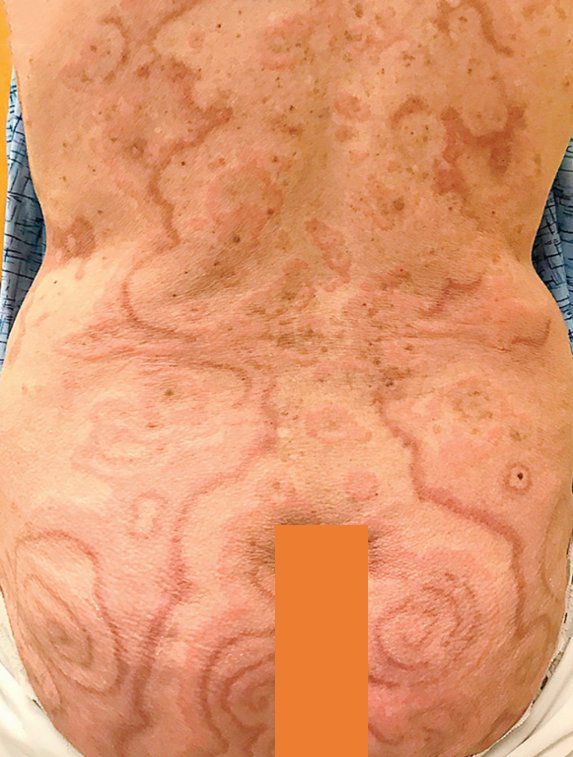
🌐 Erythema Gyratum Repens (EGR) is a rare paraneoplastic dermatosis with striking, rapidly migrating concentric bands that resemble wood grain.
🧠 It is most strongly associated with lung cancer but can signal other internal malignancies.
⚠️ Recognising this rash is important as it may be the first visible clue to an occult neoplasm.
📖 About
- Definition: A skin disorder with red, ring-like lesions forming concentric “wood-grain” patterns.
- Epidemiology: < 100 cases in the literature. Seen mainly in middle-aged/older adults, slightly more in men.
🩺 Clinical Features
- Appearance: Migrating erythematous bands, advancing several cm per week.
- Pattern: Concentric rings with clear central zones.
- Symptoms: Often itchy or burning, but systemic symptoms usually relate to underlying cancer.
- Distribution: Commonly trunk and proximal limbs, often covering large body areas.
⚡ Causes
- Paraneoplastic: Most often linked with:
- 🫁 Lung carcinoma (esp. squamous cell)
- 🧪 Oesophageal carcinoma
- 🎗️ Breast & ovarian cancers
- Occasionally with unknown primaries
- Non-malignant associations (rare): Infections, autoimmune disease, inflammatory conditions.
🔎 Investigations
- Clinical exam: Classic rash may be diagnostic if typical.
- Imaging: Chest X-ray/CT, abdo ultrasound/CT for hidden malignancy.
- Biopsy: Non-specific (parakeratosis, acanthosis, dermal inflammation), used mainly to exclude other dermatoses.
- Bloods: Tumour markers, baseline haematology/biochemistry.
- Endoscopy: If oesophageal involvement suspected.
💊 Management
- Treat underlying malignancy: Resolution often parallels successful cancer therapy.
- Symptomatic care:
- Topical corticosteroids for inflammation.
- Antihistamines for itch.
- Emollients for skin barrier support.
- Ongoing surveillance: If no cancer is initially found, patients require close follow-up, as EGR can precede tumour diagnosis by months.
📉 Prognosis
- Strongly associated with advanced malignancy, thus prognosis depends on underlying cancer stage.
- Skin lesions often resolve if the tumour is treated successfully.
📚 References
