Harlequin ichthyosis
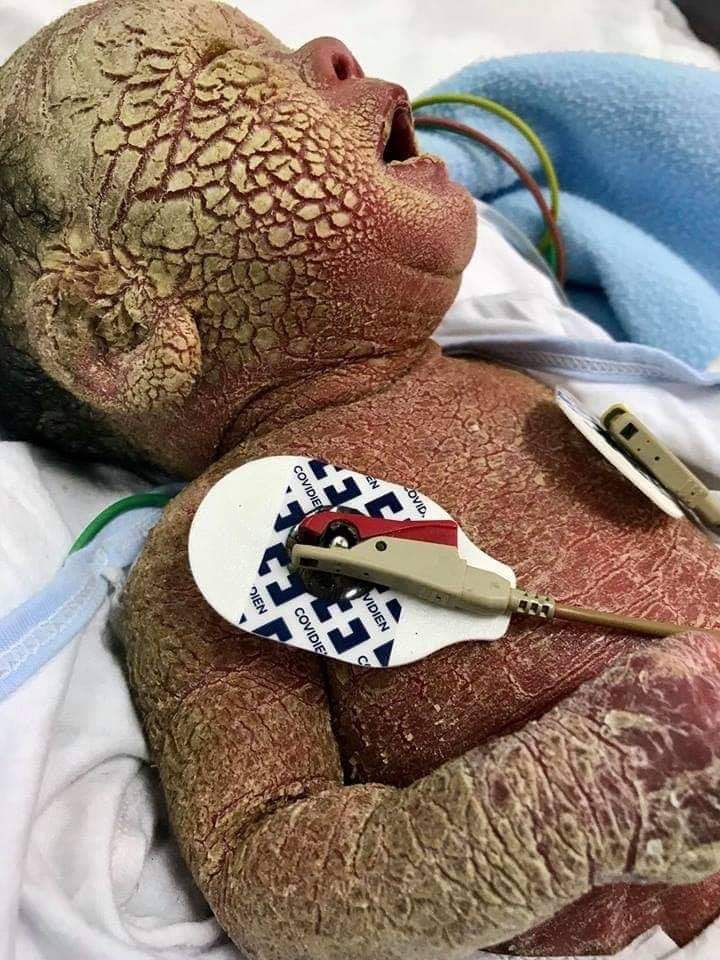
🧬👶 Harlequin ichthyosis is the most severe form of congenital ichthyosis. It presents at birth with very thick, tight, plate-like skin separated by deep fissures. It is a neonatal emergency because the abnormal skin barrier causes major risks of dehydration, infection, temperature instability, respiratory compromise and feeding difficulty.
🧬 Cause
- Usually due to pathogenic variants in the ABCA12 gene.
- Inheritance is typically autosomal recessive.
- ABCA12 is important for lipid transport in the epidermis; defective function causes severe impairment of the skin barrier.
- The rigid hyperkeratotic skin restricts movement and can affect breathing, feeding and limb perfusion.
👶 Clinical features at birth
- Thick armour-like plates of skin with deep red fissures.
- Ectropion - eyelids turned outwards, risking corneal exposure.
- Eclabium - lips pulled open, making feeding difficult.
- Flattened or poorly formed ears and nose.
- Restricted limb movement and possible digital swelling or ischaemia.
- High risk of sepsis, dehydration, electrolyte disturbance and hypothermia.
🚨 Immediate management
- Admit to a neonatal intensive care unit.
- Early involvement of neonatology, dermatology, ophthalmology, ENT, dietetics, genetics and specialist nursing.
- Place in a humidified incubator to reduce water loss and temperature instability.
- Apply frequent bland emollients to protect the skin and support shedding of the thick plates.
- Monitor fluid balance, weight, temperature, glucose, electrolytes and signs of sepsis.
- Give adequate analgesia, careful handling and nutritional support; tube feeding may be needed.
💊 Treatments
- Emollients: frequent bland paraffin-based preparations are used to reduce cracking and water loss.
- Antibiotics: use if infection is suspected or confirmed; avoid unnecessary routine use where possible.
- Retinoids: specialist teams may consider oral retinoids such as acitretin or isotretinoin to accelerate shedding of thick scale.
- Eye care: lubricants and ophthalmology review are needed for ectropion and corneal exposure.
- Avoid neonatal keratolytics such as salicylic acid or strong urea preparations because of percutaneous toxicity risk.
⚠️ Complications
- Sepsis due to impaired skin barrier.
- Dehydration and hypernatraemia from excess transepidermal water loss.
- Hypothermia or overheating due to poor thermoregulation.
- Respiratory distress from restricted chest wall movement.
- Feeding failure and poor weight gain.
- Corneal damage from ectropion.
- Digital constriction, swelling or ischaemia.
🧪 Diagnosis
- Diagnosis is usually clinical at birth.
- Confirm with genetic testing, usually looking for ABCA12 variants.
- Offer genetic counselling to parents, including recurrence risk discussion.
- Prenatal diagnosis may be possible in future pregnancies if the familial variants are known.
📈 Prognosis
- Historically, mortality was very high in the neonatal period.
- Survival has improved with modern neonatal intensive care, infection control, nutrition, emollients and specialist retinoid use.
- Survivors usually have lifelong severe ichthyosis needing ongoing dermatology input, emollients, infection management, eye care and psychosocial support.
🧠 Clinical pearl
- Harlequin ichthyosis is not just a skin diagnosis - it is a skin barrier failure emergency. The baby loses water and heat through the skin, is vulnerable to infection, and may struggle to breathe or feed because the tight skin restricts normal movement.
📌 Summary
- Harlequin ichthyosis = severe congenital ichthyosis with thick plate-like skin and fissures.
- Most cases are autosomal recessive and associated with ABCA12 variants.
- Immediate priorities are NICU care, humidification, emollients, fluids, temperature control, nutrition, infection surveillance and eye protection.
- Specialist retinoids may improve shedding but require expert neonatal dermatology input.
