🔎 Recognise it fast
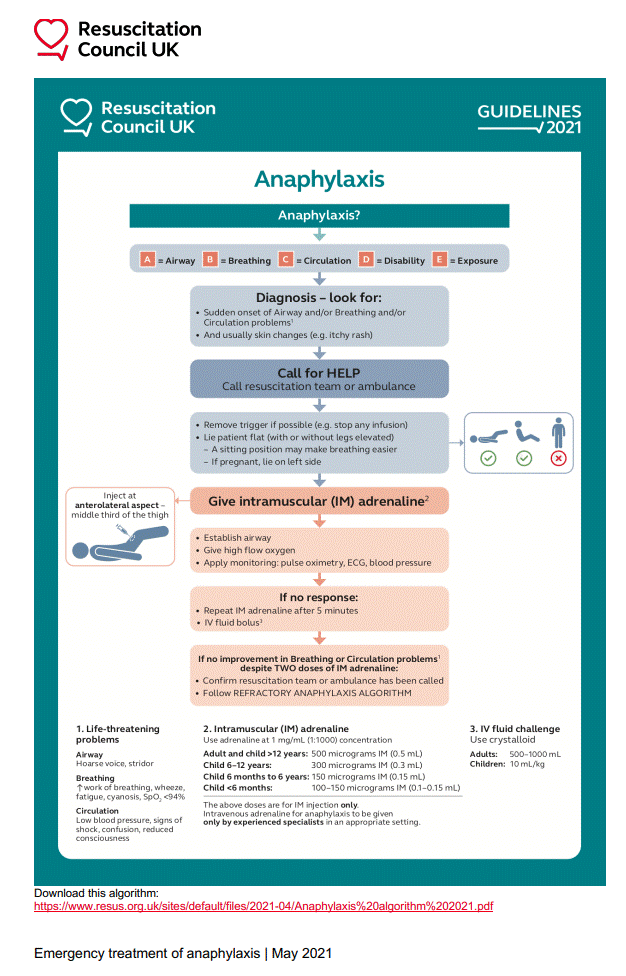
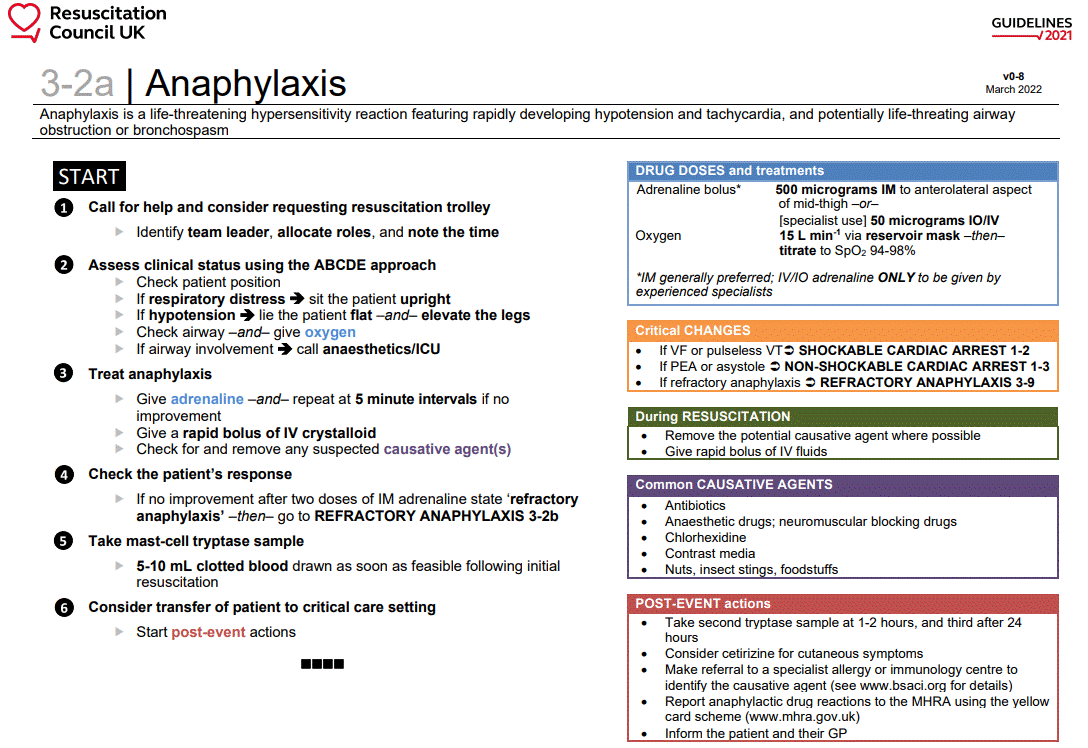
- Sudden onset airway/breathing/circulation compromise ± skin/mucosal changes (urticaria, flushing, angioedema).
- Life-threatening features: Hoarse voice/stridor, wheeze, SpO₂ <94%, hypotension/shock, confusion/collapse.
- ⚠️ Skin changes are absent in 10–20% of cases-do not be reassured by their absence.
📞 Call for help
- Hospital: Resus/MET/2222. Community: 🚑 999.
🩺 First steps (do in parallel)
- Remove the trigger: Stop infusion, remove stinger, stop ingestion.
- Position: Lie flat + elevate legs. If pregnant (>20 weeks) lie on left side.
- Avoid sudden sitting/standing: Can precipitate fatal cardiovascular collapse.
💉 IM Adrenaline (1:1000) - Anterolateral Thigh
| Age |
Dose |
Volume (1:1000) |
| Adult >12 y |
500 mcg (0.5 mg) |
0.5 mL |
| Child 6–12 y |
300 mcg (0.3 mg) |
0.3 mL |
| Child 6 mo–6 y |
150 mcg (0.15 mg) |
0.15 mL |
| Infant <6 mo |
100–150 mcg |
0.1–0.15 mL |
- ⏱ Repeat IM adrenaline every 5 minutes if no improvement.
🫁 Special Focus: Patients with Asthma
Asthma is the primary risk factor for fatal anaphylaxis.
- Diagnostic Dilemma: Severe asthma and anaphylaxis both present with wheeze and respiratory distress.
- The Rule: If a patient with known asthma has a sudden onset of wheeze after exposure to a known or suspected allergen, treat for anaphylaxis (IM Adrenaline) first.
- Inhaled Bronchodilators: Salbutamol is an adjunct only. It does not treat the upper airway oedema or vasodilation.
- Observation: NICE/RCUK recommend a longer observation period (minimum 12 hours) for patients with poorly controlled asthma who experience anaphylaxis, due to the high risk of severe biphasic reactions.
💨 Oxygen + Airway
- High-flow O₂: 15 L/min via non-rebreather.
- Stridor: Consider nebulised adrenaline (5mL of 1:1000) while awaiting senior airway support.
💧 Circulation
- IV Fluids: Adult 500–1000 mL crystalloid bolus. Child 20 mL/kg.
- Expect large volumes (3–5 L) in severe cases due to vasodilation/capillary leak.
🧪 Confirmatory Samples (NICE/RCUK Protocol)
Take 3 timed samples for Mast Cell Tryptase:
- Sample 1: As soon as feasible during resuscitation.
- Sample 2: 1–2 hours (no later than 4h) after symptom onset.
- Sample 3: 24 hours later (or at follow-up) to establish baseline.
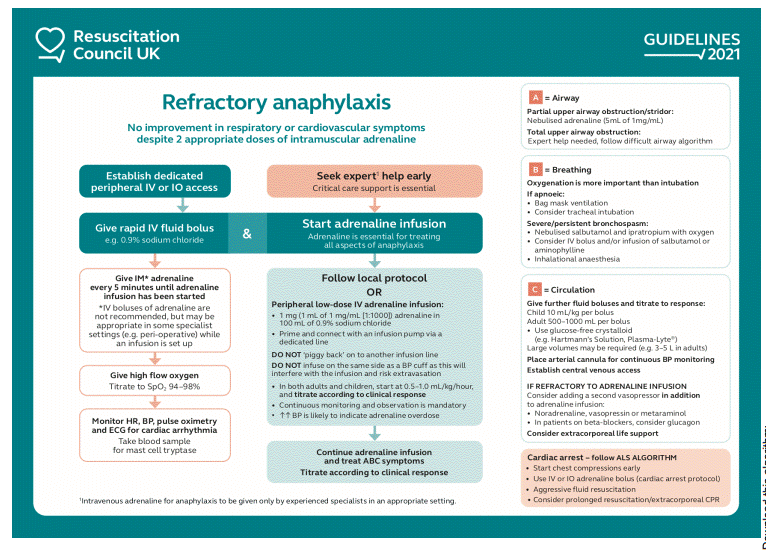
🔥 Refractory Anaphylaxis (Persistent ABC issues despite 2 IM doses)
- 🚰 Continue rapid fluid resuscitation.
- 💉 IV Adrenaline Infusion: Seek senior/critical care support early. Do not use IV boluses unless in cardiac arrest.
- 📌 Beta-blockers: If adrenaline response is poor, consider IV Glucagon (1–2 mg IV/IM in adults).
💉 IV Adrenaline Infusion (Practical Setup)
- Preparation: Mix 1 mg (1 mL of 1:1000) into 100 mL 0.9% NaCl (10 mcg/mL).
- Starting rate: 0.5–1.0 mL/kg/hour via infusion pump.
- Monitoring: Continuous ECG, pulse oximetry, and BP every 5 minutes.
⚠️ Critical Pitfalls & Tips
- The "Empty Ventricle" Phenomenon: Never allow a patient in anaphylactic shock to stand or sit up suddenly. Massive vasodilation means blood pools in the periphery; sitting up can cause zero venous return and sudden cardiac arrest.
- The "Silent Chest": In severe bronchospasm, the chest may be "silent" because there is insufficient air movement to produce a wheeze. This is a pre-terminal sign.
- Infusion Site: If using a peripheral line for adrenaline, avoid the arm used for BP monitoring.
🩺 Differentials
- Vasovagal: Bradycardia/pallor; improves when flat.
- Panic attack: Normal BP and SpO₂; often associated with perioral tingling.
- Scombroid: Mimics food allergy; caused by spoiled fish (tuna/mackerel).
🛡️ Discharge & Follow-up (NICE CG134)
- Observation: 6–12 hours (standard). Minimum 12 hours for asthmatics or late-night presentations.
- Prescription: Supply/prescribe two (2) adrenaline auto-injectors (AAI).
- Referral: Mandatory referral to a specialist Allergy Clinic.
🧑⚕️ Case Examples
- Case 1 (Asthmatic): 12-year-old with asthma eats a cookie. Develops severe wheeze but no rash. Action: Treat as anaphylaxis immediately-IM Adrenaline first, then Salbutamol.
- Case 2 (Beta-blockers): 70-year-old on Bisoprolol in shock. Minimal response to 2x IM Adrenaline. Action: Escalate to IV infusion and consider IV Glucagon.
|