
| Download the amazing global Makindo app: ✅ Means NICE/National Guidelines 2026 compliant Android | Apple | |
|---|---|
| MEDICAL DISCLAIMER: Educational use only. Not for diagnosis or management. See below for full disclaimer. |
Basilar artery thrombosis
Related Subjects: |🧠 Acute Stroke Assessment (ROSIER & NIHSS) |⚡ Causes of Stroke
Basilar artery thrombosis (BAT) is a rare (<1% of strokes) but highly lethal condition. It results from occlusion of the basilar artery, causing posterior circulation ischaemia. 💀 Untreated, mortality is extremely high. 🔬 Advances in MRA/CTA allow early detection, and mechanical thrombectomy or intra-arterial thrombolysis can be life-saving.
🧩 Anatomy
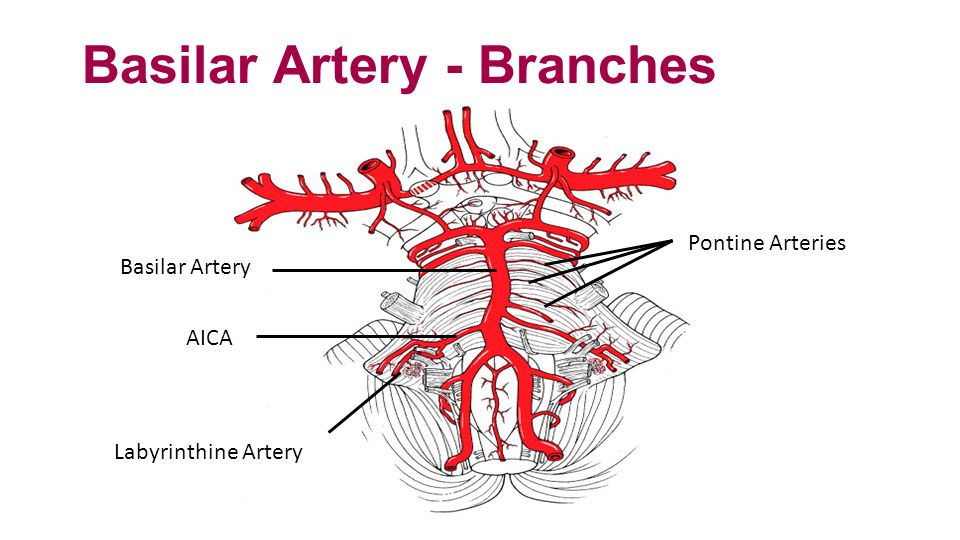
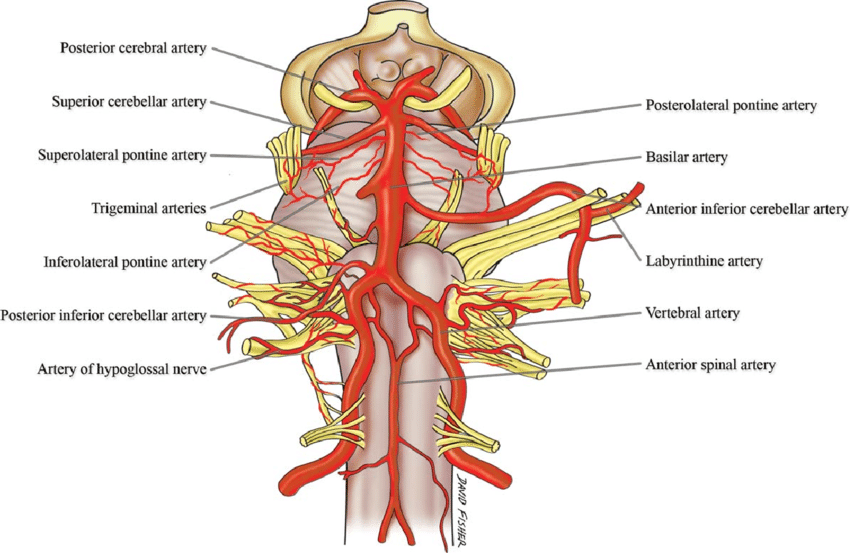
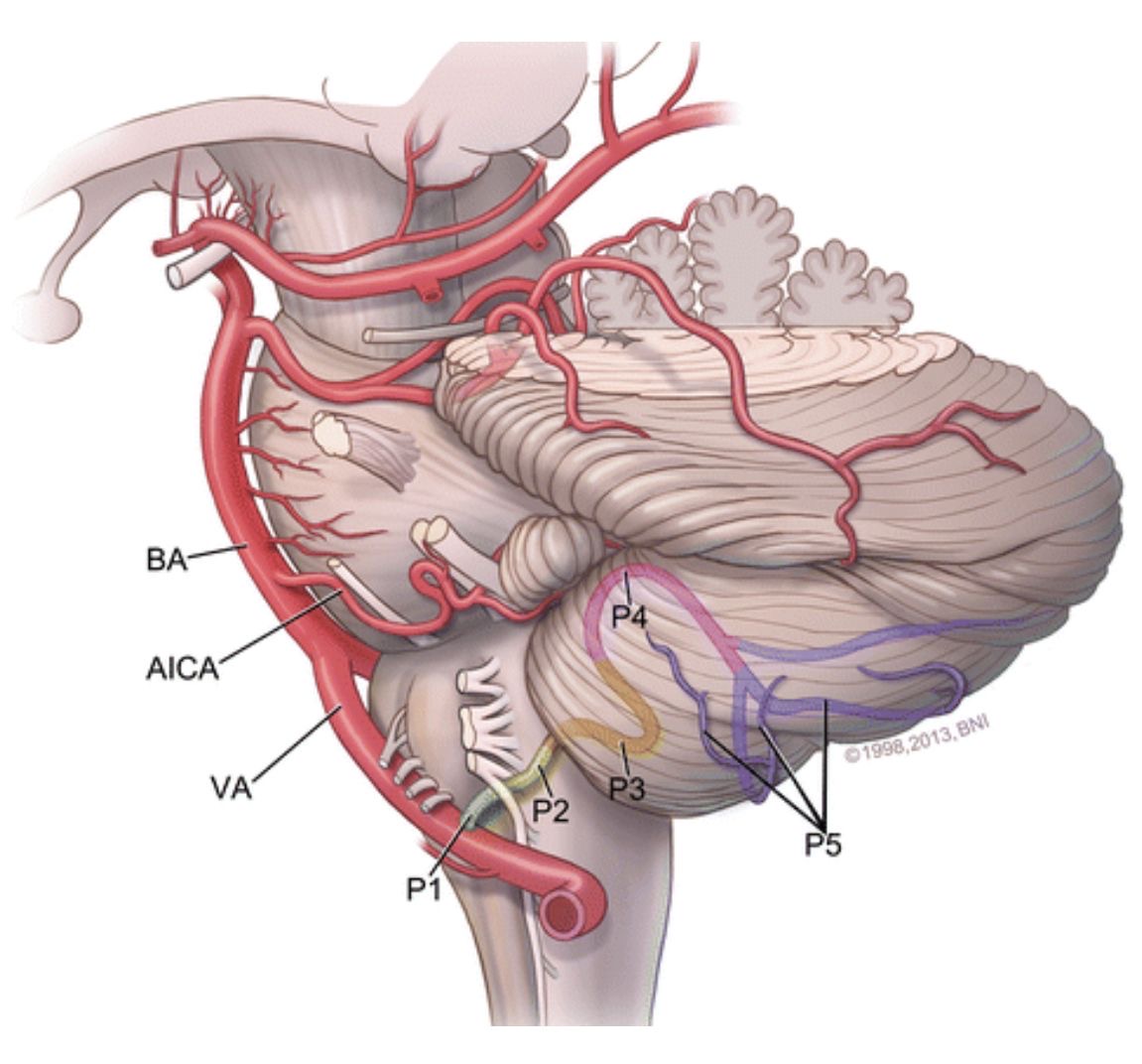
The basilar artery forms from fusion of the vertebral arteries at the lower pons, running along the brainstem before bifurcating into the posterior cerebral arteries (PCAs).
- AICA: Cerebellum + pons
- Labyrinthine artery: Inner ear
- Pontine arteries: Brainstem perforators → tiny but vital
- SCA: Superior cerebellum + midbrain
- PCAs: Occipital lobes, medial temporal lobes, thalami
🧬 Etiology & Pathophysiology
- ❤️ Cardioembolism: esp. atrial fibrillation
- 🫀 Artery-to-artery embolism: vertebral/basilar atherosclerosis
- 🩸 Thrombus in situ: plaque rupture, local clot
- 🪢 Arterial dissection: vertebral → basilar extension
- 🔥 Vasculitis/Inflammation: arteritis, meningitis
⚠️ Occlusion can evolve gradually → progressive brainstem symptoms, or suddenly → catastrophic collapse ("brainstem stroke syndrome").
⚠️ Risk Factors
- Hypertension, Diabetes, Hyperlipidaemia
- Smoking 🚬
- Atrial fibrillation & cardiac emboli
- Cervical artery dissection
- Substance misuse (cocaine)
- Systemic vasculitis / meningitis
- Inherited arteriopathies
🩺 Clinical Presentation
- 💥 Sudden collapse, coma
- 🦽 Quadriparesis/quadriplegia
- 👀 Diplopia (CN palsies)
- 🗣 Dysarthria, Dysphagia
- 🎯 Cerebellar ataxia
- 🎯 Pinpoint pupils (pons)
- 🧊 "Locked-in syndrome" → conscious, vertical eye movements only
🔎 Early signs can be subtle (dizziness, slurred speech) → high suspicion + CTA/MRA is essential.
🧪 Investigations
- 🩸 Bloods: FBC, U&E, LFT, lipids, coagulation
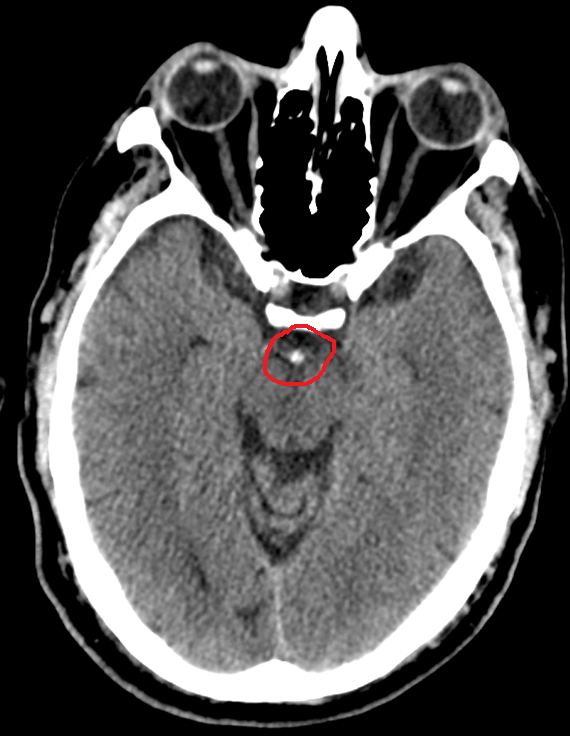
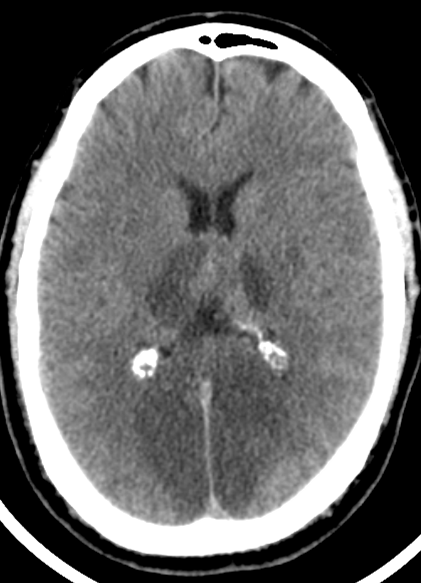
- 🖼 CT Head: hyperdense basilar sign (HDBA)
- 🩻 CTA: confirms occlusion, assesses collaterals
- 🧲 MRI DWI: acute infarcts
- 📉 ECG & Echo: cardiac embolic source
🖼 Imaging Findings
Hyperdense Basilar Artery sign (HDBA) → direct CT clue of clot
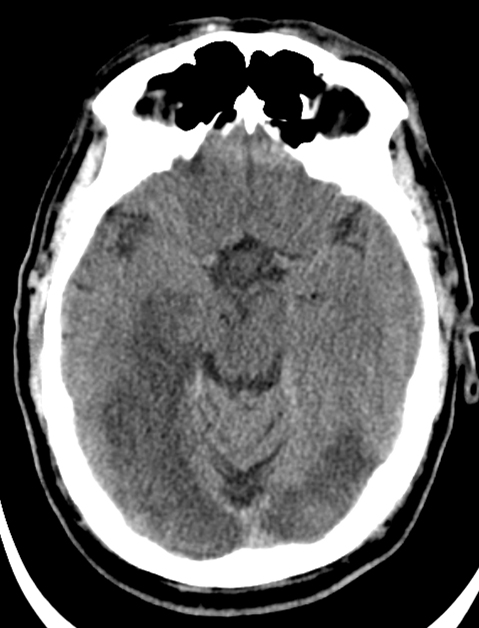
Posterior circulation infarcts → brainstem, cerebellum, occipital lobes
📉 Prognostic Indicators
- 🚬 Poor: age, smoking, high NIHSS, BATMAN <7, delayed therapy
- ✅ Good: rapid recanalisation, bilateral PCOMs, NIHSS ≤4 at 48h
🧮 BATMAN Score (CTA)
Posterior collateral scoring (0–10). <7 = poor prognosis. Includes flow in vertebral, basilar, PCAs + PCOMs.
⚕️ Management
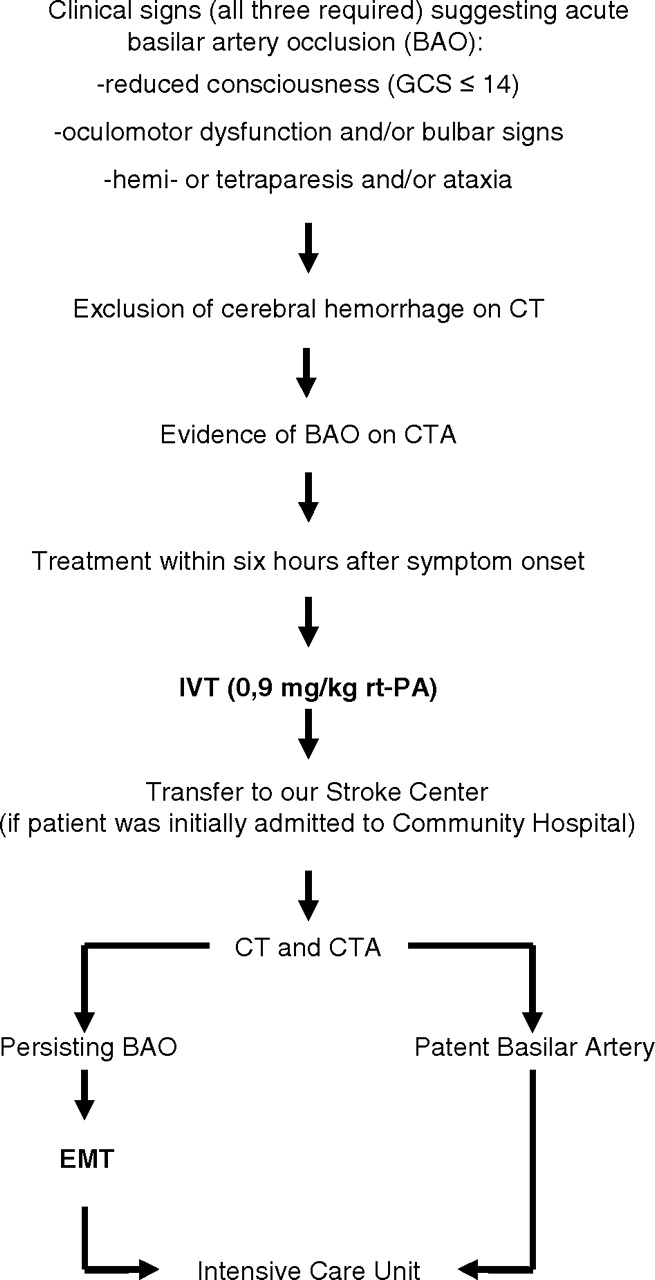
- 🛌 Stabilisation: airway, breathing, ICU admission
- 🖼 Imaging: urgent CTA for eligibility
- 💉 IV Thrombolysis: within 4.5h (select cases up to 6h)
- 🧑⚕️ Mechanical Thrombectomy: best option, up to 12–24h if salvageable tissue
- 💊 Antithrombotics: secondary prevention after reperfusion
- ❤️ Supportive: BP, glucose, prevent DVT, manage complications
- 🌅 Palliative: if prognosis grim (locked-in, brainstem necrosis)
📈 Prognosis
❌ Mortality is very high without intervention. ✅ Early recanalisation dramatically improves outcome. ⚡ Survivors often need long-term rehab for motor, swallowing, and cognitive deficits.
📚 References
- Schwartz NE et al. Basilar Occlusion Syndromes. The Neurohospitalist. 2015
- Lindsberg PJ, Mattle HP. Basilar artery occlusion. Lancet Neurol. 2011
- Rangaraju S et al. NIHSS predictors in basilar occlusion. Stroke. 2016
- Kang DH et al. Posterior circulation collaterals & outcome. J Neurointerv Surg. 2016
| The content on this website is provided for educational and informational purposes only to support exam preparation (e.g., MLA, MRCP, USMLE) and learning. This is NOT medical advice, diagnosis, treatment, or professional guidance. It does not replace consultation with a qualified healthcare professional, official guidelines (e.g., NICE, GMC, BNF), or supervised clinical practice. Always verify information with current, authoritative sources. Makindo and its contributors accept no liability for any reliance on this content, including errors, omissions, or any resulting harm, loss, or consequences. By using this site, you agree to these terms. |
|
|
Categories
- About
- Acute Medicine
- Anaesthetics and Critical Care
- Anatomy
- Anatomy and Physiology
- Biochemistry
- Book
- Cardiology
- Collections
- CompSci
- Crib Sheets
- Critical care
- Dental
- Dermatology
- Differentials
- Drugs
- ENT
- Electrocardiogram
- Embryology
- Emergency Medicine
- Endocrinology
- Ethics
- Foundation Doctors
- GCSE
- Gastroenterology
- General Practice
- Genetics
- Geriatric Medicine
- Geriatrics
- Guidelines
- Haematology
- Hepatology
- Immunology
- Infectious Diseases
- Infographic
- Investigations
- Lists
- MRCP
- Mandatory Training
- Medical Students
- Microbiology
- Nephrology
- Neurology
- Neurosurgery
- Nutrition
- OSCE
- Obstetrics Gynaecology
- Oncology
- Ophthalmology
- Oral Medicine and Dentistry
- Orthopaedics
- Paediatrics
- Palliative
- Palliative Care
- Pathology
- Pharmacology
- Physiology
- Procedures
- Psychiatry
- Public Health
- Radiology
- Respiratory
- Resuscitation
- Revision Topics
- Rheumatology
- Statistics and Research
- Stroke
- Surgery
- Toxicology
- Trauma and Orthopaedics
- USMLE
- Urology
- Vascular Surgery