Dupuytrens contracture ✅
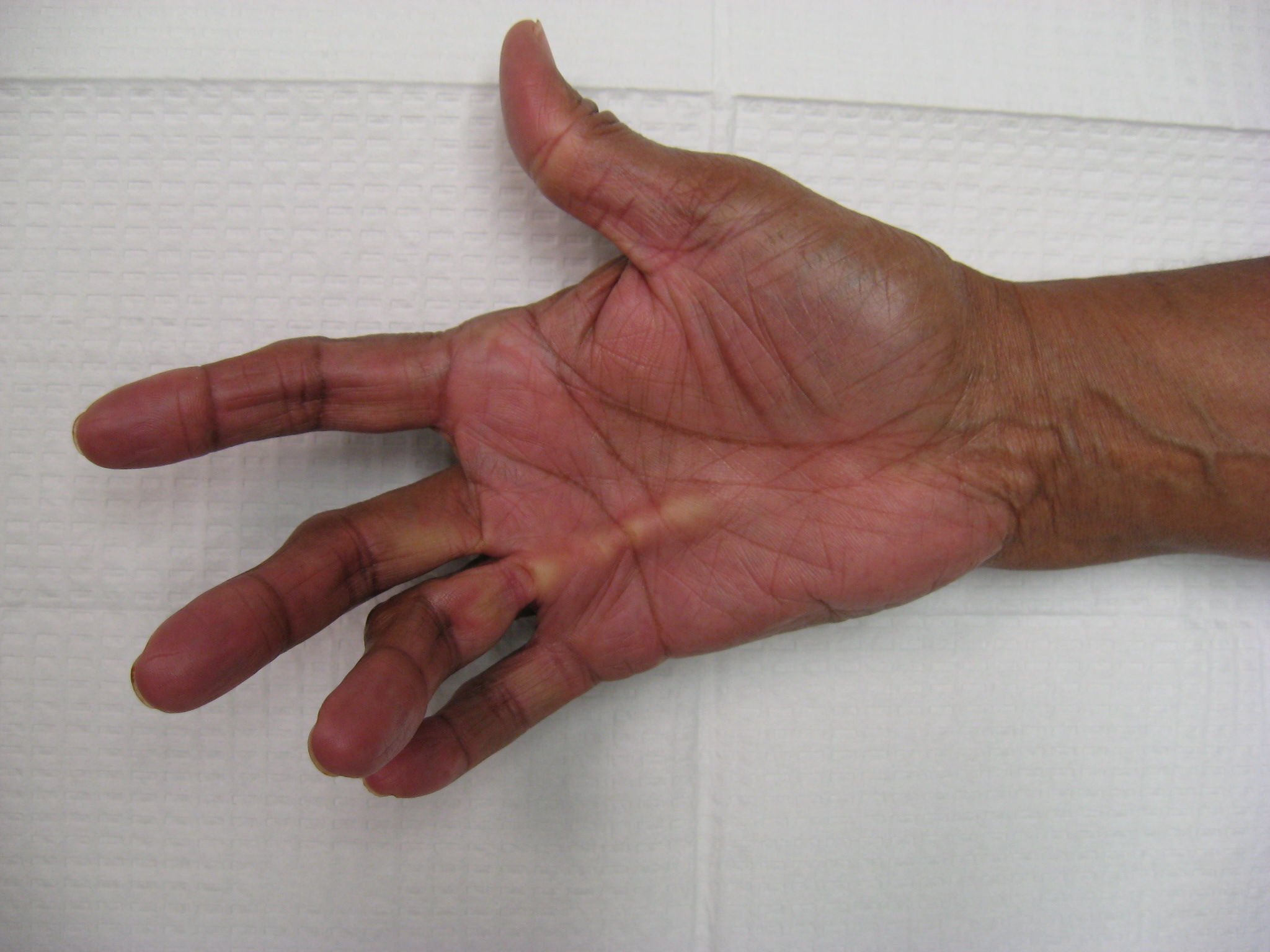
📖 Dupuytren’s disease is a chronic fibroproliferative disorder of the palmar fascia causing progressive nodules, cords, and ultimately flexion contracture of the fingers.
📖 About
- A chronic hand condition that may impair grip, dexterity, and hand function.
- Characterised by progressive fibrosis of the palmar fascia.
- Most often affects the ring and little finger.
- May be bilateral.
🧬 Aetiology / Pathophysiology
- The exact cause is unknown.
- There is abnormal proliferation of myofibroblasts and deposition of type III collagen.
- This leads to palmar nodules, then cord formation, then flexion deformity at the MCP and/or PIP joints.
🔗 Associations / Risk Factors
- More common in men and in older adults.
- Associated with family history.
- Associated with diabetes, smoking, and alcohol excess.
- May be associated with Peyronie’s disease and Ledderhose disease.
🖐️ Clinical Features
- Painless palmar nodules and skin tethering/pitting.
- Development of fibrous cords.
- Progressive flexion deformity, especially of the ring and little fingers.
- Table-top test: inability to place the hand flat on a table suggests significant contracture.
- Symptoms may interfere with hand function and daily activities.
🔎 Investigations
- Clinical diagnosis - investigations are not usually required.
- Consider alternative diagnoses if the presentation is atypical.
⚕️ Management
- Mild disease without contracture: observation and review if progression occurs.
- Refer to a hand surgeon or specialist in plastic/orthopaedic surgery if there is any contracture or significant loss of function.
- Needle fasciotomy may be used in selected patients.
- Surgery (for example fasciectomy / dermofasciectomy in selected cases) is used when deformity is functionally significant.
- Recurrence can occur after treatment.
💡 Key Exam Pearl: Think painless palmar nodules → cords → flexion deformity, usually affecting the ring and little fingers.
Diagnosis is clinical.
In UK primary care, the key decision is whether there is contracture or functional impairment, because that is what drives referral.
📚 References
The Dupuytren’s Research Group
