
| Download the amazing global Makindo app: ✅ Means NICE/National Guidelines 2026 compliant Android | Apple | |
|---|---|
| MEDICAL DISCLAIMER: Educational use only. Not for diagnosis or management. See below for full disclaimer. |
Blood
Related Subjects: |Red blood cells |White blood cells |Lymphocytes |Platelets |Cryoprecipitate |Fresh Frozen Plasma |d Blood Cell Maturation
Blood is a vital fluid in the human body, essential for various physiological processes. It is composed of several constituents, each playing a significant role in maintaining homeostasis. This essay explores the components of blood, its functions, and key indices used to assess blood health in humans.
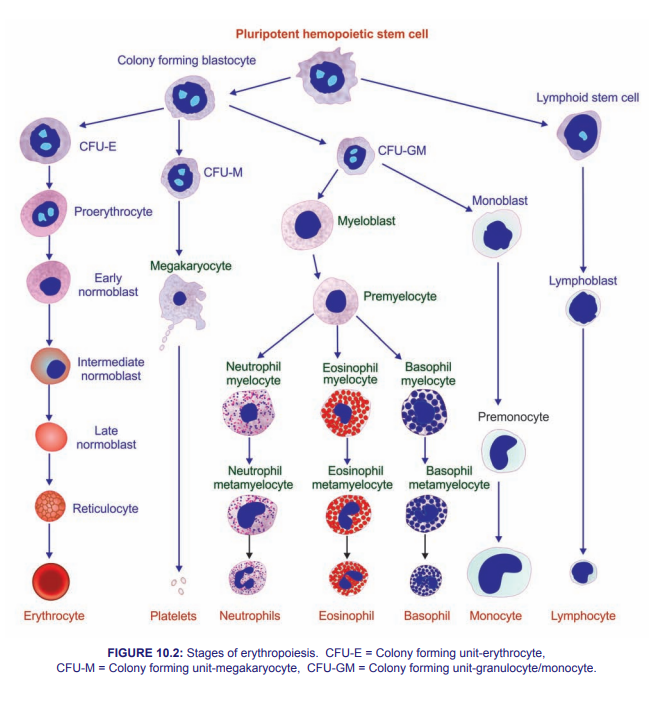
Cell types
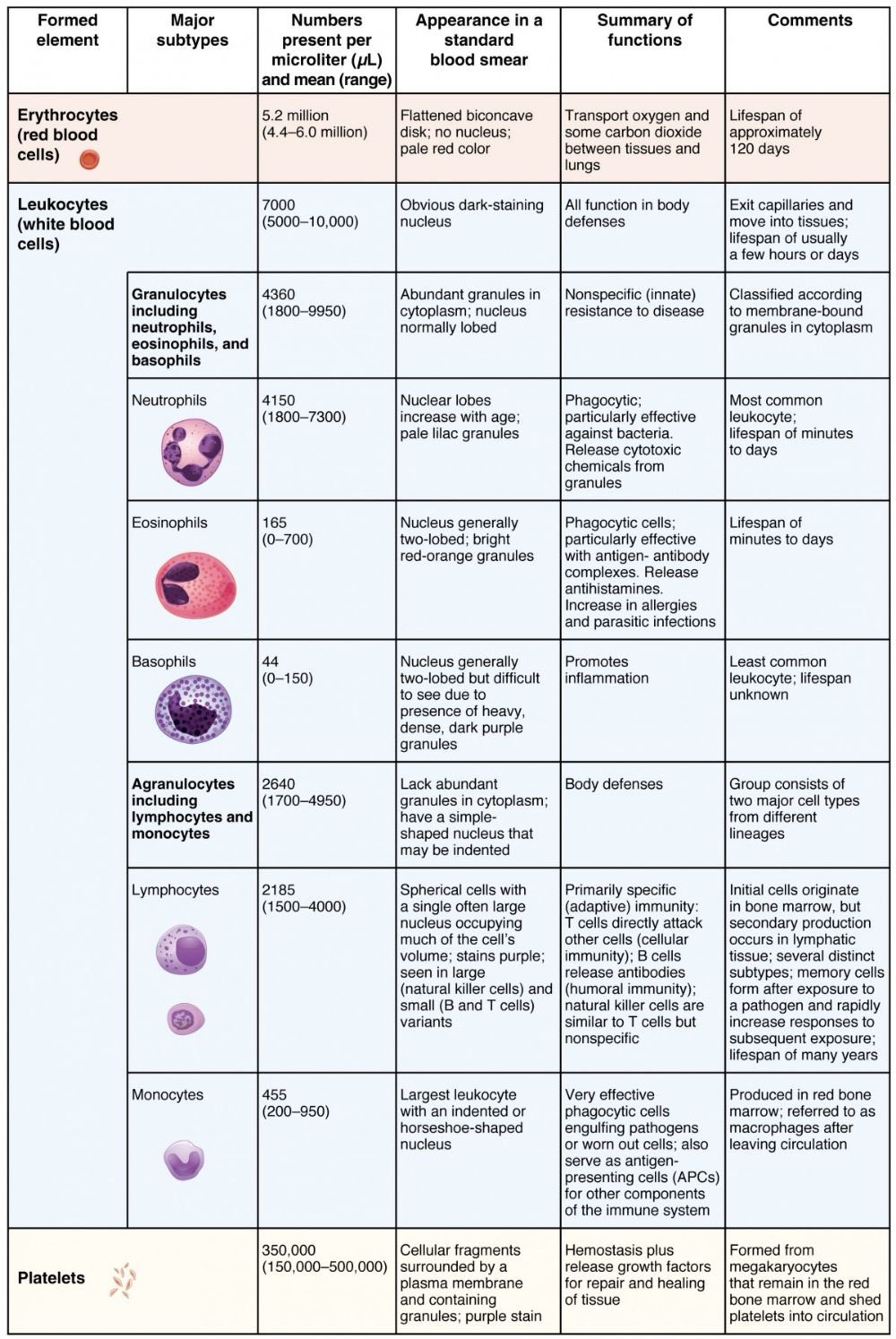
Constituents of Blood
Blood consists of two main components: plasma and formed elements . The formed elements include red blood cells, white blood cells, and platelets.
- Plasma : Plasma is the liquid portion of blood, comprising about 55% of total blood volume. It contains water, electrolytes, proteins (such as albumin, fibrinogen, and globulins), and nutrients.
- Red Blood Cells (RBCs) : Also known as erythrocytes, these cells are responsible for oxygen transport from the lungs to the tissues. RBCs contain the protein haemoglobin, which binds oxygen molecules.
- White Blood Cells (WBCs) : These cells, also called leukocytes, are essential for the immune system. They help fight infections and include various subtypes such as neutrophils, lymphocytes, monocytes, eosinophils, and basophils.
- Platelets : Platelets, or thrombocytes, are crucial for blood clotting. They prevent excessive blood loss by forming clots at the site of vessel injury.
Functions of Blood
Blood performs several critical functions in the human body, including:
- Transport : Blood transports oxygen from the lungs to tissues and organs and carries carbon dioxide back to the lungs for exhalation. It also distributes nutrients, hormones, and waste products throughout the body.
- Regulation : Blood helps regulate body temperature, pH levels, and fluid balance. Plasma proteins and electrolytes play a key role in maintaining osmotic pressure and pH homeostasis.
- Protection : White blood cells protect the body against infections by engulfing pathogens and producing antibodies. Platelets and clotting factors in the blood form clots to prevent excessive bleeding.
Blood Indices
Several indices are used to evaluate the health and functionality of blood, particularly in clinical settings. These indices are measured using blood tests and include:
- Haemoglobin (Hb) : Haemoglobin is the protein in RBCs that carries oxygen. Its level indicates the oxygen-carrying capacity of the blood. Low Hb levels may suggest anaemia.
- Haematocrit (Hct) : Haematocrit is the percentage of blood volume occupied by red blood cells. It helps assess the concentration of RBCs in blood. Low haematocrit may indicate anaemia, while high haematocrit could point to polycythaemia.
- Mean Corpuscular Volume (MCV) : MCV measures the average size of red blood cells. It is useful in diagnosing different types of anaemia. Microcytic anaemia has low MCV, while macrocytic anaemia shows high MCV.
- White Blood Cell Count (WBC) : The total count of white blood cells is an indicator of immune system activity. High WBC levels may suggest infection or inflammation, while low levels could indicate immunodeficiency.
- Platelet Count : This measures the number of platelets in the blood, which is crucial for assessing clotting function. Low platelet count (thrombocytopenia) may lead to bleeding disorders.
Blood Groups
Human blood can be classified into different blood groups based on the presence of specific antigens on the surface of RBCs. The two main blood group systems are the ABO system and the Rh factor .
- ABO Blood Group System : This system divides blood into four groups: A, B, AB, and O, depending on the presence of A and B antigens on RBCs.
- Rh Factor : The Rh system determines the positive or negative nature of the blood group. If the Rh antigen is present, the blood type is Rh-positive; otherwise, it is Rh-negative.
Conclusion
Blood is a complex and essential tissue in the human body, fulfilling numerous vital functions such as transport, regulation, and protection. The understanding of its components, indices, and the classification of blood groups is crucial for medical science, enabling the diagnosis of various diseases and the administration of safe blood transfusions.