
| Download the amazing global Makindo app: ✅ Means NICE/National Guidelines 2026 compliant Android | Apple | |
|---|---|
| MEDICAL DISCLAIMER: Educational use only. Not for diagnosis or management. See below for full disclaimer. |
Prosthetic Metal and Tissue Valves
Related Subjects: Chronic Heart Failure
|Heart Failure and Pulmonary Oedema
|Loop Diuretics
|Prosthetic Metal and Tissue Valves
|
Ivabradine
|
Furosemide
|
Angiotensin Converting Enzyme Inhibitors
|
Cardiac Resynchronisation Therapy (CRT) Pacemaker
|
🫀 Problems with prosthetic valve issues should be referred urgently to a Cardiologist.
Elective operative mortality ≈ 2%, but this risk rises in patients with IHD (often combined with CABG), lung disease, and the elderly.
💡 Exam Tip:
Mechanical = 🕰️ long-lasting but ⚠️ lifelong Warfarin.
Biological = 🩸 no long-term anticoagulation but 🧓 wears out sooner.
Choice depends on age, bleeding risk, anticoagulation tolerance, and patient preference (e.g. pregnancy planning).
⚖️ Biological vs Mechanical Prosthetic Valves
Feature
Biological (Bioprosthetic) Valves
Mechanical (Metal) Valves
🖼️ Image
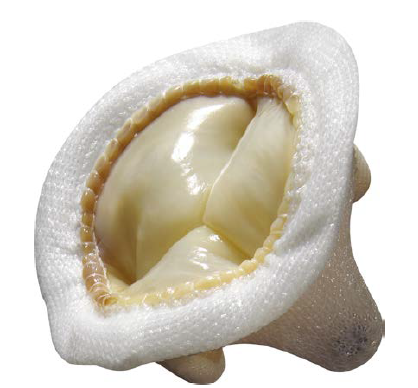
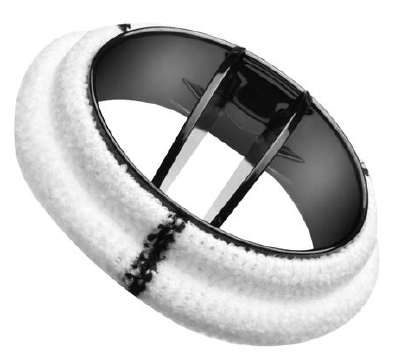
⚙️ Material
Porcine/bovine tissue, or human homografts.
Titanium, carbon-based alloys. Eg. bileaflet designs.
⏳ Longevity
10–15 years (degenerates faster in younger pts).
Durable, often 20–30+ years (can last lifetime).
💊 Anticoagulation
🩸 Thrombosis Risk
Low (similar to native valve).
High → hence mandatory anticoagulation.
💨 Haemodynamics
More physiological flow, lower gradients.
Slightly less natural flow but durable.
🦠 Endocarditis Risk
Risk exists → antibiotic prophylaxis required in high-risk procedures.
Similar risk; prosthetic valve endocarditis can be devastating.
🎶 Sound
Silent.
Characteristic audible “click” on auscultation.
⚠️ Complications
👩⚕️ Clinical Indications
🔖 Examples
📚 References
| The content on this website is provided for educational and informational purposes only to support exam preparation (e.g., MLA, MRCP, USMLE) and learning. This is NOT medical advice, diagnosis, treatment, or professional guidance. It does not replace consultation with a qualified healthcare professional, official guidelines (e.g., NICE, GMC, BNF), or supervised clinical practice. Always verify information with current, authoritative sources. Makindo and its contributors accept no liability for any reliance on this content, including errors, omissions, or any resulting harm, loss, or consequences. By using this site, you agree to these terms. |
|
|
Categories
- About
- Acute Medicine
- Anaesthetics and Critical Care
- Anatomy
- Anatomy and Physiology
- Biochemistry
- Book
- Cardiology
- Collections
- CompSci
- Crib Sheets
- Critical care
- Dental
- Dermatology
- Differentials
- Drugs
- ENT
- Electrocardiogram
- Embryology
- Emergency Medicine
- Endocrinology
- Ethics
- Foundation Doctors
- GCSE
- Gastroenterology
- General Practice
- Genetics
- Geriatric Medicine
- Geriatrics
- Guidelines
- Haematology
- Hepatology
- Immunology
- Infectious Diseases
- Infographic
- Investigations
- Lists
- MRCP
- Mandatory Training
- Medical Students
- Microbiology
- Nephrology
- Neurology
- Neurosurgery
- Nutrition
- OSCE
- Obstetrics Gynaecology
- Oncology
- Ophthalmology
- Oral Medicine and Dentistry
- Orthopaedics
- Paediatrics
- Palliative
- Palliative Care
- Pathology
- Pharmacology
- Physiology
- Procedures
- Psychiatry
- Public Health
- Radiology
- Respiratory
- Resuscitation
- Revision Topics
- Rheumatology
- Statistics and Research
- Stroke
- Surgery
- Toxicology
- Trauma and Orthopaedics
- USMLE
- Urology
- Vascular Surgery