Related Subjects:
|Fat Metabolism
|Glucose Metabolism
|Protein metabolism
|Glycolysis Krebs Electron Transport Chain
|DNA replication
|DNA structure in Nucleus
|Cell Cycle
|Mitosis and Meiosis
|Ribosomes
|Microtubules
|Mitochondria
|Smooth and Rough Endoplasmic Reticulum
🔬 Overview of Glucose Metabolism
Glucose metabolism is the central pathway for energy production, providing ATP and biosynthetic precursors.
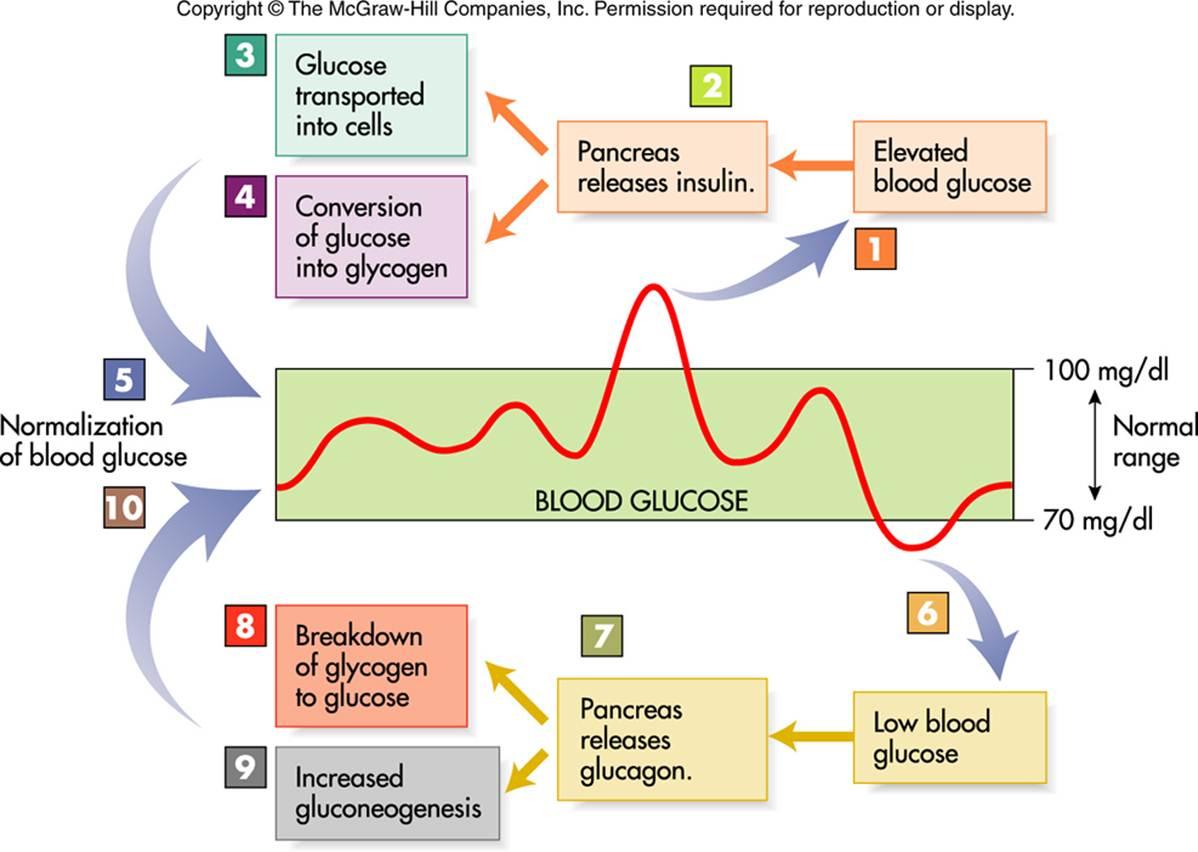
It is tightly regulated by hormones (insulin, glucagon, adrenaline) and enzymes, ensuring energy homeostasis in health and disease.
🧾 Blood Glucose Ranges (UK vs US)
| Range | UK (mmol/L) | US (mg/dL) |
|---|
| ✅ Normal (fasting) | 4.0 – 5.9 | 72 – 106 |
| ✅ Normal (post-meal) | 4.0 – 7.8 | 72 – 140 |
| ⚠️ Pre-diabetes (fasting) | 6.0 – 6.9 | 108 – 124 |
| 🩸 Diabetes (fasting) | ≥ 7.0 | ≥ 126 |
| ⬇️ Hypoglycaemia | < 4.0 | < 72 |
| 📊 Random diabetes dx | ≥ 11.1 | ≥ 200 |
| ⚠️ High hyperglycaemia | 20 | 360 |
| 🚨 Severe hyperglycaemia | 30 | 540 |
📌 Key Concepts
- 🍞 Sources of Glucose :
- Dietary Intake: Absorption of carbohydrates (starch, sucrose, lactose).
- Glycogenolysis: Breakdown of liver & muscle glycogen stores.
- Gluconeogenesis: Glucose synthesis from lactate, amino acids, and glycerol.
- ⚡ Glycolysis :
- Converts glucose → pyruvate, yielding ATP & NADH.
- Occurs in the cytoplasm (anaerobic pathway).
- 🌬️ Aerobic Respiration :
- Krebs cycle + oxidative phosphorylation in mitochondria.
- Produces ~36 ATP per glucose molecule.
- 💨 Anaerobic Respiration :
- Occurs when O₂ is limited → pyruvate → lactate.
- Important in muscle fatigue and red blood cells (no mitochondria).
- 📦 Glycogen Metabolism :
- Glycogenesis: Storage of glucose as glycogen.
- Glycogenolysis: Mobilisation of glycogen to glucose.
- ⚖️ Regulation :
- 💉 Hormones: Insulin ↓ glucose, Glucagon & Adrenaline ↑ glucose.
- 🧪 Key Enzymes: Hexokinase, Phosphofructokinase (rate-limiting), Pyruvate kinase.
🧪 Detailed Pathways
- 🌀 Glycolysis: Glucose → Pyruvate (key step: PFK-1).
- 🔥 Krebs Cycle: Pyruvate → Acetyl-CoA → CO₂ + NADH + FADH₂.
- 🔋 Oxidative Phosphorylation: ETC in mitochondria generates ATP via proton gradient.
- 🔄 Gluconeogenesis: Liver/kidney generate glucose during fasting (substrates: lactate, glycerol, alanine).
- 📦 Glycogen Metabolism:
- Glycogenesis: Glucose → UDP-glucose → Glycogen (via Glycogen Synthase).
- Glycogenolysis: Glycogen → Glucose-1-phosphate → Glucose-6-phosphate → Glucose (liver only).
⚠️ Clinical Relevance
- 🩸 Diabetes Mellitus: Impaired insulin → hyperglycemia, altered lipid/protein metabolism.
- 🥴 Hypoglycemia: Excess insulin or inadequate glucose → tremor, sweating, confusion, seizures.
- 🧬 Glycogen Storage Diseases: Inherited enzyme defects (e.g. Von Gierke’s, Pompe’s, McArdle’s).
- 💔 Metabolic Syndrome: Insulin resistance, dyslipidemia, hypertension → ↑ CVD risk.
📖 Summary
Glucose metabolism underpins cellular energy.
✔️ Glycolysis → quick ATP
✔️ Aerobic respiration → efficient ATP
✔️ Gluconeogenesis → fasting survival
✔️ Glycogen metabolism → energy storage & release
Hormonal control (insulin vs glucagon) is vital for homeostasis, with disruption leading to diabetes, hypoglycemia, and metabolic disease.