
| Download the amazing global Makindo app: ✅ Means NICE/National Guidelines 2026 compliant Android | Apple | |
|---|---|
| MEDICAL DISCLAIMER: Educational use only. Not for diagnosis or management. See below for full disclaimer. |
Kuru
Related Subjects: |Dementias |Gerstmann-Straussler-Scheinker Syndrome (GSS) |Fatal Familial Insomnia (FFI) |Creutzfeldt Jakob disease (CJD) |Variant Creutzfeldt Jakob disease (vCJD) |Kuru
🧠 The word “kuru” means “to shiver” or “trembling in fear.” It is a rare prion disease, now extinct, that spread among the Fore people of Papua New Guinea through ritual cannibalism. Thought to have begun from a sporadic prion mutation (like sporadic CJD) which became transmissible through ingestion of infected brain tissue.
📌 About
- Rare, fatal, progressive neurological disease, mainly affecting the cerebellum (ataxia dominant).
- Classified as a transmissible spongiform encephalopathy (TSE).
- Historical epidemic in the 1950s–60s among the Fore people of New Guinea.
🧬 Aetiology
- Spread through ritual cannibalism, especially ingestion of infected brain tissue.
- Women and children were most affected since they were more involved in funerary cannibal practices.
🚶 Clinical Stages
- Ambulant stage: Headache, joint pain, shivering, gait ataxia, dysarthria, tremor, unsteadiness.
- Ambulant with help: Severe tremors, worsening ataxia, frequent falls.
- Chair/Bedbound: Advanced frailty, immobility, high risk of secondary infections.
- Unlike many other encephalopathies: no early fever, convulsions, or coma.
🔎 Investigations (historical)
- Routine bloods (FBC, U&E, LFTs) – non-specific.
- EEG: non-specific changes.
- CT/MRI: cerebral and cerebellar atrophy in late stages.
- CSF analysis: non-diagnostic.
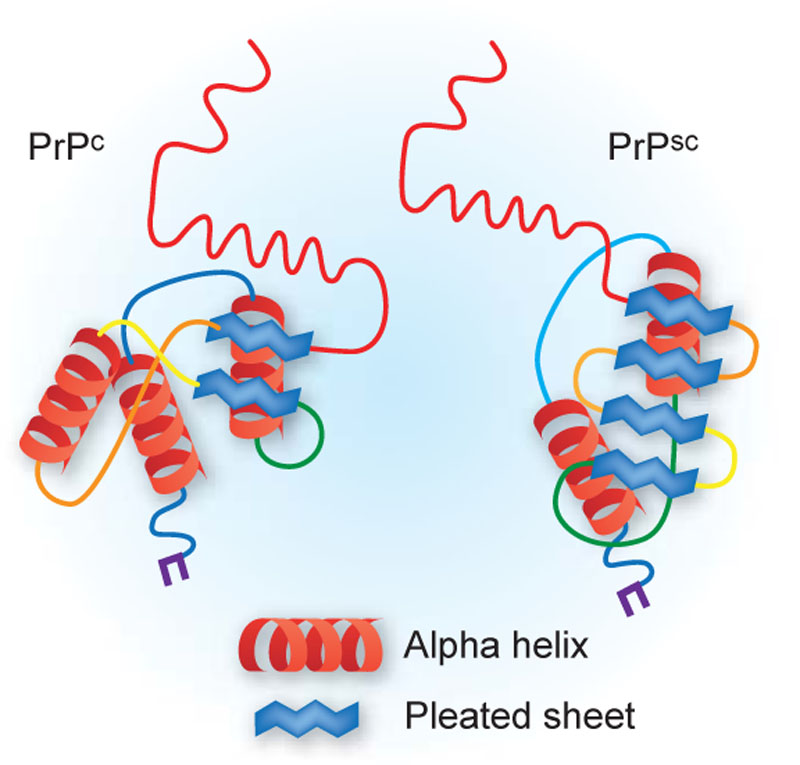
🧩 Pathology
- Marked spongiform change with widespread plaques.
- Neuronal shrinkage, vacuolation (“moth-eaten” appearance).
- Purkinje cell degeneration in the cerebellum.
- Similar histology to scrapie and other prion diseases.
💊 Management
- No treatment or cure existed.
- Public health measure: stopping ritual cannibalism ended the epidemic.
📚 References
| The content on this website is provided for educational and informational purposes only to support exam preparation (e.g., MLA, MRCP, USMLE) and learning. This is NOT medical advice, diagnosis, treatment, or professional guidance. It does not replace consultation with a qualified healthcare professional, official guidelines (e.g., NICE, GMC, BNF), or supervised clinical practice. Always verify information with current, authoritative sources. Makindo and its contributors accept no liability for any reliance on this content, including errors, omissions, or any resulting harm, loss, or consequences. By using this site, you agree to these terms. |
|
|
Categories
- About
- Acute Medicine
- Anaesthetics and Critical Care
- Anatomy
- Anatomy and Physiology
- Biochemistry
- Book
- Cardiology
- Collections
- CompSci
- Crib Sheets
- Critical care
- Dental
- Dermatology
- Differentials
- Drugs
- ENT
- Electrocardiogram
- Embryology
- Emergency Medicine
- Endocrinology
- Ethics
- Foundation Doctors
- GCSE
- Gastroenterology
- General Practice
- Genetics
- Geriatric Medicine
- Geriatrics
- Guidelines
- Haematology
- Hepatology
- Immunology
- Infectious Diseases
- Infographic
- Investigations
- Lists
- MRCP
- Mandatory Training
- Medical Students
- Microbiology
- Nephrology
- Neurology
- Neurosurgery
- Nutrition
- OSCE
- Obstetrics Gynaecology
- Oncology
- Ophthalmology
- Oral Medicine and Dentistry
- Orthopaedics
- Paediatrics
- Palliative
- Palliative Care
- Pathology
- Pharmacology
- Physiology
- Procedures
- Psychiatry
- Public Health
- Radiology
- Respiratory
- Resuscitation
- Revision Topics
- Rheumatology
- Statistics and Research
- Stroke
- Surgery
- Toxicology
- Trauma and Orthopaedics
- USMLE
- Urology
- Vascular Surgery