
| Download the amazing global Makindo app: ✅ Means NICE/National Guidelines 2026 compliant Android | Apple | |
|---|---|
| MEDICAL DISCLAIMER: Educational use only. Not for diagnosis or management. See below for full disclaimer. |
Lacunar Stroke Syndromes
Related Subjects: |Acute Stroke Assessment (ROSIER&NIHSS) |Atrial Fibrillation |Atrial Myxoma |Causes of Stroke |Ischaemic Stroke |Cancer and Stroke |Hypertension |Small Vessel Disease |CADASIL |CARASIL
🧠 Lacunar strokes are part of the spectrum of cerebral small vessel disease (SVD), affecting tiny penetrating arteries, arterioles, venules, and capillaries. They are strongly linked with hypertension, diabetes, and smoking. While often small and sometimes silent, multiple lacunes predict vascular cognitive decline and dementia.
📜 Historical Aspects
- First described by Dechambre in the 1800s.
- Initially recognised at autopsy as small cavities in deep brain tissue.
- Charles Miller Fisher (1960s) correlated pathology with ~15 clinical lacunar stroke syndromes.
📖 Introduction
- Cause 20–30% of all ischaemic strokes.
- Short-term prognosis is often good, but cumulative burden ↑ long-term mortality and dementia risk.
- Definition: small (<1.5 cm), round/ovoid infarcts in subcortical deep structures supplied by penetrating arteries.
- Perforators branch from larger arteries but narrow to <0.4 mm ➝ vulnerable to hypertension.
- Pathology: lipohyalinosis, microatheroma, or small emboli.
🩸 Vessels & Common Sites
- Lenticulostriates (MCA) → internal capsule/basal ganglia.
- Heubner/anterior striate (ACA) → caudate, anterior IC.
- Thalamoperforators (PCA) → thalamus.
- Paramedian branches (basilar) → pons.
- Sites: basal ganglia, thalamus, IC, corona radiata, basis pontis.
⚠️ Aetiology & Risk Factors
- Hypertension (~90%) → lipohyalinosis.
- Diabetes → accelerates microvascular disease.
- Smoking → endothelial damage.
- Other: microemboli, genetic arteriopathies (e.g. CADASIL).
- These sites are also prone to microbleeds and hypertensive ICH.
🧩 Anatomy of Lesions
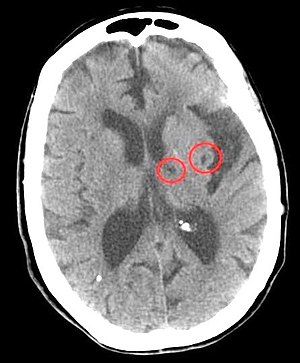
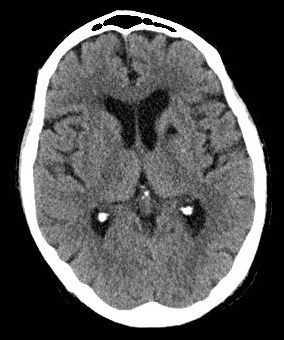
- Round/ovoid, <1.5 cm, subcortical.
- End-artery supply, no collaterals ➝ even tiny occlusion causes symptoms.
📌 Clinical Lacunar Syndromes
Classic lacunar syndromes are localising. Cortical signs (aphasia, neglect, agnosia) are absent.
| Syndrome | Features |
|---|---|
| Pure Motor Stroke | Most common. Unilateral weakness (face ± arm ± leg). Lesion: posterior limb IC, basis pontis, corona radiata. |
| Pure Sensory Stroke | Unilateral sensory loss (face/arm/leg). Lesion: ventral thalamus. |
| Ataxic Hemiparesis | Hemiparesis + ipsilateral ataxia. Lesion: anterior IC or corona radiata. |
| Sensorimotor Stroke | Motor + sensory symptoms. Lesion: thalamus/internal capsule. |
| Dysarthria–Clumsy Hand | Dysarthria + clumsy hand. Lesion: anterior IC or pons. |
| Silent | Often incidental. Silent lacunes are ~5× more common than symptomatic ones. |
📝 Exam Pearls
- PMS → posterior limb IC.
- PSS → ventral thalamus.
- Dysarthria–Clumsy Hand → anterior IC.
- Multiple silent lacunes = vascular cognitive impairment risk.
🔍 Differentials
- Striatocapsular infarcts: larger (>1.5 cm), wedge-shaped, embolic.
- Microbleeds: same territories, seen on GRE/SWI MRI.
- Virchow–Robin spaces: CSF-like, benign, mimic lacunes.
🧪 Investigations
- Bloods: FBC, U&E, LFTs, ESR, HbA1c, lipids.
- ECG: LVH, AF (though embolic = cortical, not lacunar).
- CT: rounded hypodense lesion <15 mm in deep brain.
- MRI (DWI): acute diffusion restriction; GRE/SWI: microbleeds.
- Angiography: usually normal (except ostial microatheroma).
- Genetic: consider CADASIL if FH + leukoencephalopathy.
💊 Management (NICE, UK)
Secondary prevention is key:
- 🩺 BP target <140/90 mmHg (lower if diabetic/proteinuric).
- 💊 Antiplatelet: Clopidogrel 75 mg OD (first line, NICE 2023).
- 💊 Statin: Atorvastatin 80 mg unless contraindicated.
- 🚭 Lifestyle: stop smoking, reduce alcohol, exercise.
- 🩸 Diabetes: optimise glycaemic control.
- 🧠 Screen for vascular cognitive impairment in follow-up.
🔄 Pathophysiology Flow
Hypertension / Diabetes / Smoking → Lipohyalinosis or Microatheroma → Perforator Occlusion → Lacunar Infarct → Clinical Syndrome / Silent Lesion → Cumulative Burden → Vascular Cognitive Impairment.
📚 References
- Mark Fisher: What causes lacunar stroke? (JNNP)
- NICE Stroke & TIA guideline (NG128)
| The content on this website is provided for educational and informational purposes only to support exam preparation (e.g., MLA, MRCP, USMLE) and learning. This is NOT medical advice, diagnosis, treatment, or professional guidance. It does not replace consultation with a qualified healthcare professional, official guidelines (e.g., NICE, GMC, BNF), or supervised clinical practice. Always verify information with current, authoritative sources. Makindo and its contributors accept no liability for any reliance on this content, including errors, omissions, or any resulting harm, loss, or consequences. By using this site, you agree to these terms. |
|
|
Categories
- About
- Acute Medicine
- Anaesthetics and Critical Care
- Anatomy
- Anatomy and Physiology
- Biochemistry
- Book
- Cardiology
- Collections
- CompSci
- Crib Sheets
- Critical care
- Dental
- Dermatology
- Differentials
- Drugs
- ENT
- Electrocardiogram
- Embryology
- Emergency Medicine
- Endocrinology
- Ethics
- Foundation Doctors
- GCSE
- Gastroenterology
- General Practice
- Genetics
- Geriatric Medicine
- Geriatrics
- Guidelines
- Haematology
- Hepatology
- Immunology
- Infectious Diseases
- Infographic
- Investigations
- Lists
- MRCP
- Mandatory Training
- Medical Students
- Microbiology
- Nephrology
- Neurology
- Neurosurgery
- Nutrition
- OSCE
- Obstetrics Gynaecology
- Oncology
- Ophthalmology
- Oral Medicine and Dentistry
- Orthopaedics
- Paediatrics
- Palliative
- Palliative Care
- Pathology
- Pharmacology
- Physiology
- Procedures
- Psychiatry
- Public Health
- Radiology
- Respiratory
- Resuscitation
- Revision Topics
- Rheumatology
- Statistics and Research
- Stroke
- Surgery
- Toxicology
- Trauma and Orthopaedics
- USMLE
- Urology
- Vascular Surgery