
| Download the amazing global Makindo app: ✅ Means NICE/National Guidelines 2026 compliant Android | Apple | |
|---|---|
| MEDICAL DISCLAIMER: Educational use only. Not for diagnosis or management. See below for full disclaimer. |
Mitochondria
Related Subjects: |DNA replication |DNA structure in Nucleus |Cell Cycle |Mitosis and Meiosis |Ribosomes |Microtubules |Mitochondria |Smooth and Rough Endoplasmic Reticulum |Electron Transport chain
🧬 Mitochondria are double-membrane, energy-producing organelles found in almost all eukaryotic cells. They generate ATP via oxidative phosphorylation and act as central hubs for metabolism, apoptosis, redox signalling, and calcium buffering. Because high-energy tissues (brain, myocardium, skeletal muscle, renal tubules) depend heavily on aerobic metabolism, mitochondrial dysfunction often presents with multi-system disease.
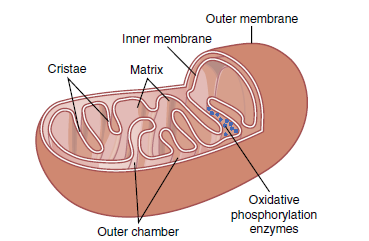
🧱 Structure of Mitochondria
- Outer Membrane
- Contains voltage-dependent anion channels (VDAC/porins) allowing diffusion of small molecules (<5 kDa).
- Relatively permeable compared with the inner membrane.
- Inner Membrane
- Highly folded into cristae → increases surface area for the electron transport chain (ETC).
- Rich in cardiolipin, making it highly impermeable and ideal for maintaining a proton gradient.
- Contains complexes I–IV of the ETC and ATP synthase (Complex V).
- Intermembrane Space
- Site of proton accumulation during oxidative phosphorylation.
- Contains cytochrome c (released in apoptosis).
- Matrix
- Contains enzymes for the TCA (Krebs) cycle, β-oxidation, and parts of amino acid metabolism.
- Houses mitochondrial DNA (mtDNA), mitochondrial ribosomes, and tRNAs.
⚡ Oxidative Phosphorylation (High-Yield Concept)
- NADH (Complex I) and FADH₂ (Complex II) donate electrons to the ETC.
- Electron flow through Complexes I–IV drives proton pumping into the intermembrane space.
- The proton motive force powers ATP synthase (Complex V) to convert ADP → ATP.
- Oxygen is the final electron acceptor → reduced to water.
🧠 Clinical reasoning point: In hypoxia or cyanide poisoning, oxidative phosphorylation halts because oxygen cannot act as the terminal electron acceptor. ATP falls rapidly → high-energy tissues fail first.
🔬 Key Functional Roles
- Energy Metabolism
- TCA cycle (matrix), β-oxidation of fatty acids, and ketogenesis (liver).
- Links carbohydrate, fat, and protein metabolism.
- Calcium Homeostasis
- Mitochondria buffer cytosolic Ca²⁺.
- Important in muscle contraction and neuronal signalling.
- Excess Ca²⁺ can trigger mitochondrial permeability transition → apoptosis.
- Apoptosis
- Mitochondrial outer membrane permeabilisation (MOMP) releases cytochrome c.
- Activates caspase cascade (intrinsic pathway).
- Regulated by Bcl-2 family proteins.
- Reactive Oxygen Species (ROS)
- Small amounts generated physiologically by the ETC.
- Excess ROS → oxidative damage to lipids, proteins, and DNA.
- Thermogenesis
- Brown adipose tissue expresses uncoupling protein-1 (UCP1).
- Proton gradient dissipated as heat instead of ATP → non-shivering thermogenesis (important in neonates).
🧬 Mitochondrial DNA (mtDNA)
- Small circular genome (~16.5 kb).
- Encodes 13 ETC proteins, 22 tRNAs, and 2 rRNAs.
- Replicates independently of nuclear DNA.
- Maternal inheritance - sperm mitochondria are destroyed after fertilisation.
- Exhibits heteroplasmy: mixture of normal and mutant mtDNA determines disease severity (threshold effect).
🏥 Clinical Relevance
- Mitochondrial Disorders
- Often multisystem with neuromuscular features.
- Examples:
- Leber Hereditary Optic Neuropathy (LHON)
- MELAS (Mitochondrial Encephalomyopathy, Lactic Acidosis, Stroke-like episodes)
- MERRF (Myoclonic Epilepsy with Ragged Red Fibres)
- High lactate may reflect impaired oxidative phosphorylation.
- Cardiology
- Ischaemia-reperfusion injury partly mediated by mitochondrial ROS and permeability transition.
- Cardiomyopathies can occur in mitochondrial disease.
- Neurology
- Neurons rely almost entirely on oxidative metabolism.
- Mitochondrial dysfunction implicated in Parkinson’s disease and other neurodegenerative disorders.
- Endocrinology & Metabolism
- Defects in β-oxidation → hypoketotic hypoglycaemia.
- Metformin inhibits Complex I (clinically relevant in renal impairment and lactic acidosis risk).
- Oncology
- Warburg effect: cancer cells preferentially use glycolysis despite oxygen availability.
- Mitochondria still play roles in apoptosis resistance and biosynthesis.
🧪 Investigation Clues in Mitochondrial Disease
- Elevated serum lactate ± pyruvate.
- Muscle biopsy: “ragged red fibres”.
- Genetic testing (mtDNA and nuclear genes).
🧠 Exam Pearls
- Tissues most affected = high ATP demand.
- Maternal inheritance pattern → think mtDNA.
- Apoptosis (intrinsic pathway) is mitochondrial-mediated.
- Oxygen is required for ATP production - not for the TCA cycle directly, but to regenerate NAD⁺ via the ETC.
📌 Summary
Mitochondria are dynamic metabolic hubs responsible for ATP generation, apoptosis regulation, calcium buffering, and redox signalling. Their unique genome and maternal inheritance pattern explain distinctive clinical presentations. Understanding mitochondrial physiology links biochemistry to real clinical medicine - from hypoxic injury and lactic acidosis to inherited neurometabolic disease and cardiomyopathy.
| The content on this website is provided for educational and informational purposes only to support exam preparation (e.g., MLA, MRCP, USMLE) and learning. This is NOT medical advice, diagnosis, treatment, or professional guidance. It does not replace consultation with a qualified healthcare professional, official guidelines (e.g., NICE, GMC, BNF), or supervised clinical practice. Always verify information with current, authoritative sources. Makindo and its contributors accept no liability for any reliance on this content, including errors, omissions, or any resulting harm, loss, or consequences. By using this site, you agree to these terms. |
|
|
Categories
- About
- Acute Medicine
- Anaesthetics and Critical Care
- Anatomy
- Anatomy and Physiology
- Biochemistry
- Book
- Cardiology
- Collections
- CompSci
- Crib Sheets
- Critical care
- Dental
- Dermatology
- Differentials
- Drugs
- ENT
- Electrocardiogram
- Embryology
- Emergency Medicine
- Endocrinology
- Ethics
- Foundation Doctors
- GCSE
- Gastroenterology
- General Practice
- Genetics
- Geriatric Medicine
- Geriatrics
- Guidelines
- Haematology
- Hepatology
- Immunology
- Infectious Diseases
- Infographic
- Investigations
- Lists
- MRCP
- Mandatory Training
- Medical Students
- Microbiology
- Nephrology
- Neurology
- Neurosurgery
- Nutrition
- OSCE
- Obstetrics Gynaecology
- Oncology
- Ophthalmology
- Oral Medicine and Dentistry
- Orthopaedics
- Paediatrics
- Palliative
- Palliative Care
- Pathology
- Pharmacology
- Physiology
- Procedures
- Psychiatry
- Public Health
- Radiology
- Respiratory
- Resuscitation
- Revision Topics
- Rheumatology
- Statistics and Research
- Stroke
- Surgery
- Toxicology
- Trauma and Orthopaedics
- USMLE
- Urology
- Vascular Surgery