
| Download the amazing global Makindo app: ✅ Means NICE/National Guidelines 2026 compliant Android | Apple | |
|---|---|
| MEDICAL DISCLAIMER: Educational use only. Not for diagnosis or management. See below for full disclaimer. |
Downs syndrome
Related Subjects: | Osteoporosis | Autosomal Dominant | Autosomal Recessive | X Linked Recessive |Chromosomal Defects |Turner's syndrome (Children) |Down's syndrome (Children) |Fragile X (Children) |Learning (Intellectual) disability
🧬 Down's Syndrome usually due to a nondisjunction event, where chromosome 21 fails to separate during gamete formation. This results in an embryo with three copies of chromosome 21 (trisomy 21) instead of the usual two.
⚙️ Aetiology
- ➕ Non-disjunction (≈94%): All cells have an extra chromosome 21. Strongly linked with increasing maternal age 👩🦳.
- 🧩 Mosaicism (≈2%): Only some cells carry trisomy 21 → usually milder phenotype.
- 🔗 Robertsonian Translocation (≈4%): Extra chromosome 21 material attached to another chromosome. Can be inherited, so parental karyotyping may be required.
🧑⚕️ Clinical Features
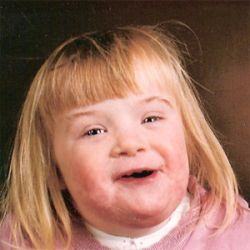
- 🙂 Distinct facies: flattened nasal bridge, small ears/mouth, epicanthic folds.
- 👋 Hands & eyes: single palmar crease, Brushfield spots in iris ✨.
- 📏 Growth & tone: short stature, short neck, flat occiput, hypotonia.
- ❤️ Congenital heart defects: ASD, AVSD, PDA, Tetralogy of Fallot.
- 🍽️ GI anomalies: duodenal atresia, Hirschsprung’s disease (“double bubble” sign on USS).
- 🧠 Intellectual disability: variable severity, usually mild–moderate.
📅 Long-Term Considerations
- 🩸 ↑ Risk of leukaemia (ALL, AML).
- 🦋 Endocrine: hypothyroidism, coeliac disease.
- ⚡ Neurology: epilepsy, early-onset Alzheimer’s disease.
- 👂 ENT/respiratory: recurrent infections, hearing and vision impairment.
- 🍔 GI: duodenal atresia, Hirschsprung’s disease (recurring complications).
- ⚖️ Obesity & metabolic concerns in later life.
🔍 Investigations
- 👶 Prenatal screening: Combined test (nuchal translucency + maternal serum markers), cell-free DNA testing. Diagnosis confirmed by CVS or amniocentesis.
- 🧪 Postnatal testing: Karyotyping confirms trisomy 21 or translocation.
- 🖥️ Ultrasound findings: Nuchal thickening, cardiac AVSD, “double bubble” duodenal atresia.
🩺 Management
- 🗣️ Developmental support: speech & language therapy, physiotherapy, special education programmes.
- ❤️ Cardiac care: early screening & surgery for congenital defects.
- 🧪 Endocrine & GI monitoring: thyroid screening, coeliac testing, feeding support.
- 👂 Infection prevention & ENT input for recurrent otitis media/hearing loss.
- 🏃 Long-term: obesity prevention, social inclusion, transition to adult services.
- 🎉 Life expectancy has significantly improved - many now live into their 60s+ with good support.
Cases - Down’s Syndrome (Trisomy 21)
- Case 1 - Neonatal features 👶: A newborn girl is noted to have hypotonia, upslanting palpebral fissures, single palmar crease, and sandal gap toes. Echocardiogram shows an atrioventricular septal defect. Karyotype: 47,XY,+21. Diagnosis: Down’s syndrome with congenital heart disease. Managed with supportive neonatal care and surgical planning for cardiac defect.
- Case 2 - Developmental delay & learning disability 🧩: A 5-year-old boy with Down’s syndrome is referred for delayed speech, global developmental delay, and mild intellectual disability. Exam: short stature, macroglossia. Diagnosis: Down’s syndrome with developmental and learning difficulties. Managed with speech therapy, educational support, and regular health surveillance (thyroid, hearing, vision).
- Case 3 - Adult complications ❤️🧠: A 36-year-old woman with Down’s syndrome presents with progressive memory loss and disorientation. Exam: mild cognitive decline and hypothyroidism. Diagnosis: early-onset Alzheimer’s disease in Down’s syndrome. Managed with memory clinic referral, thyroid replacement, and supportive social care.
Teaching Point 🩺: Down’s syndrome (Trisomy 21) is the most common chromosomal abnormality. Key associations: - Neonates: hypotonia, cardiac defects (AVSD, VSD, ASD). - Children: learning disability, recurrent infections, hypothyroidism, hearing/vision problems. - Adults: early-onset Alzheimer’s, sleep apnoea, atlanto-axial instability. Diagnosis confirmed by karyotype or rapid aneuploidy testing. Lifelong multidisciplinary support is essential.
| The content on this website is provided for educational and informational purposes only to support exam preparation (e.g., MLA, MRCP, USMLE) and learning. This is NOT medical advice, diagnosis, treatment, or professional guidance. It does not replace consultation with a qualified healthcare professional, official guidelines (e.g., NICE, GMC, BNF), or supervised clinical practice. Always verify information with current, authoritative sources. Makindo and its contributors accept no liability for any reliance on this content, including errors, omissions, or any resulting harm, loss, or consequences. By using this site, you agree to these terms. |
|
|
Categories
- About
- Acute Medicine
- Anaesthetics and Critical Care
- Anatomy
- Anatomy and Physiology
- Biochemistry
- Book
- Cardiology
- Collections
- CompSci
- Crib Sheets
- Critical care
- Dental
- Dermatology
- Differentials
- Drugs
- ENT
- Electrocardiogram
- Embryology
- Emergency Medicine
- Endocrinology
- Ethics
- Foundation Doctors
- GCSE
- Gastroenterology
- General Practice
- Genetics
- Geriatric Medicine
- Geriatrics
- Guidelines
- Haematology
- Hepatology
- Immunology
- Infectious Diseases
- Infographic
- Investigations
- Lists
- MRCP
- Mandatory Training
- Medical Students
- Microbiology
- Nephrology
- Neurology
- Neurosurgery
- Nutrition
- OSCE
- Obstetrics Gynaecology
- Oncology
- Ophthalmology
- Oral Medicine and Dentistry
- Orthopaedics
- Paediatrics
- Palliative
- Palliative Care
- Pathology
- Pharmacology
- Physiology
- Procedures
- Psychiatry
- Public Health
- Radiology
- Respiratory
- Resuscitation
- Revision Topics
- Rheumatology
- Statistics and Research
- Stroke
- Surgery
- Toxicology
- Trauma and Orthopaedics
- USMLE
- Urology
- Vascular Surgery