Related Subjects:
|Metabolic acidosis
|Aspirin or Salicylates toxicity
|Ethylene glycol toxicity
|Renal Tubular Acidosis
|Lactic acidosis
🌍 Introduction
- MELAS = Mitochondrial Encephalomyopathy, Lactic Acidosis, and Stroke-like Episodes.
- A multisystem mitochondrial disorder impairing oxidative phosphorylation, leading to failure of ATP generation in high-energy tissues (brain, muscle, heart).
- Stroke-like episodes arise not from vascular occlusion but from cellular energy failure, producing infarct-like injury in non-vascular distributions.
- Typically presents in childhood or adolescence, but adult-onset cases occur.
🧬 Aetiology
- Caused by mutations in mitochondrial DNA, especially MT-TL1 (tRNALeu gene) at position 3243A>G (~80% of cases).
- Inheritance is maternal (mitochondria transmitted via the ovum), but de novo mutations also occur.
- Impaired oxidative phosphorylation → ↓ ATP → neuronal and myocyte dysfunction → stroke-like events, seizures, and lactic acidosis.
- Other common mutations: 3271T>C and rarer mtDNA changes.
🧑⚕️ Clinical Presentation
- Onset usually before 40 years, often in childhood.
- Neurological: Stroke-like episodes (hemiparesis, hemianopia, cortical blindness), seizures, migraines, cognitive decline, psychiatric features (e.g. psychosis, schizophrenia-like illness).
- Muscle: Weakness, exercise intolerance, muscle pain.
- Systemic: Short stature, sensorineural hearing loss, diabetes mellitus, cardiomyopathy (HOCM, WPW, long QT), endocrine abnormalities.
- Course: Relapsing–remitting with cumulative neurological injury → progressive disability and dementia.
🔎 Diagnosis
- Blood tests: May reveal diabetes, raised lactate (though systemic acidosis is not always present).
- CSF: Elevated lactate and lactate/pyruvate ratio, even with normal serum lactate.
- Muscle biopsy: Ragged red fibers on Gomori trichrome stain = hallmark of mitochondrial myopathy.
- Genetics: Detection of pathogenic mtDNA mutations (esp. m.3243A>G).
- ECG: HOCM, WPW, long QT should be screened for.
🖥 Imaging
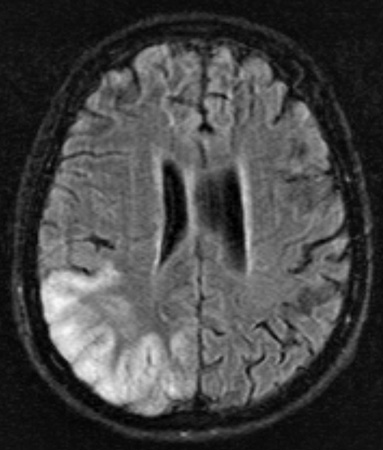
- MRI/CT: Cortical/subcortical lesions that cross vascular territories (posterior parietal, occipital lobes common).
- DWI/ADC: T2 “shine-through” with vasogenic rather than cytotoxic edema.
- MR Spectroscopy: Elevated lactate peak even in normal-appearing regions.
- Other: Basal ganglia calcifications in older patients.
💊 Management
- No curative therapy - management is supportive and preventative.
- Acute episodes: L-arginine IV may improve cerebral perfusion and reduce severity of stroke-like events.
- Supplements: Coenzyme Q10, L-carnitine, B vitamins (empirical, variable benefit).
- General: Seizure control, diabetes and cardiac management, hearing aids if needed.
- Avoid: Valproate (can worsen mitochondrial dysfunction).
- Multidisciplinary input: neurology, genetics, cardiology, endocrinology, psychiatry.
📚 References & Further Reading
