
| Download the amazing global Makindo app: ✅ Means NICE/National Guidelines 2026 compliant Android | Apple | |
|---|---|
| MEDICAL DISCLAIMER: Educational use only. Not for diagnosis or management. See below for full disclaimer. |
Stroke Thrombolysis
Related Subjects: |Acute Stroke Assessment (ROSIER&NIHSS) |Atrial Fibrillation |Atrial Myxoma |Stroke Thrombolysis |Anterior Choroidal Artery Ischaemic Stroke |Causes of Stroke |Ischaemic Stroke |Cancer and Stroke |Hypertension |Small Vessel Disease |CADASIL |CARASIL
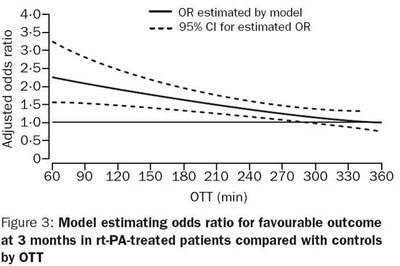
⏱️ Time is brain! Acute ischaemic stroke is a medical emergency. IV thrombolysis should be given as fast and as safely as possible in eligible patients, and mechanical thrombectomy should be pursued urgently when indicated.
🧠 Core Principle
- Exclude intracranial haemorrhage urgently with brain imaging.
- If the patient is eligible, give IV thrombolysis within 4.5 hours of symptom onset / last known well.
- Do not delay transfer for thrombectomy while waiting to see the effect of thrombolysis.
- Selected patients with wake-up stroke or presentation beyond 4.5 hours may still be eligible if advanced imaging shows salvageable brain tissue.
✅ Current Thrombolytic Drugs
- Tenecteplase is now a NICE-recommended option for acute ischaemic stroke.
- Alteplase remains an option.
- In practice, local stroke services usually use the least expensive suitable option in line with NICE guidance.
💉 Drug Protocols
- Tenecteplase
- 0.25 mg/kg IV bolus (maximum 25 mg)
- Given as a single IV bolus over about 5–10 seconds
- Much simpler logistically than alteplase
- Alteplase
- 0.9 mg/kg (maximum 90 mg)
- 10% of the total dose as an initial IV bolus
- 90% infused over 60 minutes
🧾 Who Should Be Considered for IV Thrombolysis?
- Clinical diagnosis of acute ischaemic stroke causing a disabling neurological deficit
- Intracranial haemorrhage excluded on urgent imaging
- Treatment can start within 4.5 hours of symptom onset / last known well
- Given within a well-organised stroke service with trained staff, imaging, monitoring, and re-imaging available
🕒 Extended / Imaging-Selected Thrombolysis
- Selected patients may be considered for alteplase when:
- treatment can start between 4.5 and 9 hours from known onset, or
- they have wake-up stroke and treatment can start within 9 hours of the midpoint of sleep, or
- MRI shows DWI–FLAIR mismatch suggesting salvageable tissue
- This depends on local imaging capability and stroke specialist assessment.
🚫 Major Contraindications / Reasons Not to Thrombolyse
- Intracranial haemorrhage on imaging
- Clinical suspicion of subarachnoid haemorrhage, even if CT is initially normal
- Blood pressure >185/110 mmHg despite treatment
- Current major bleeding or very high bleeding risk
- Recent major surgery / major trauma / significant invasive procedure where bleeding risk is unacceptable
- Known coagulation abnormality or anticoagulant effect that is unsafe for thrombolysis
- Very low platelets or major uncontrolled metabolic abnormality mimicking stroke
- Stroke mimic or another diagnosis judged more likely than acute ischaemic stroke
⚠️ Important Practical Points
- Age alone is not a reason to withhold thrombolysis.
- Stroke severity alone is not an absolute exclusion.
- Minor symptoms may still justify treatment if the deficit is disabling (for example aphasia, hemianopia, severe hand weakness, disabling ataxia).
- Seizure at onset is not an absolute exclusion if persistent deficits are thought to be due to stroke rather than purely post-ictal change.
- Posterior circulation stroke can be thrombolysed if otherwise eligible.
🖥️ Imaging Checklist
- Non-contrast CT head immediately if the patient may be eligible for reperfusion therapy
- If thrombectomy may be indicated, perform CT angiography after the non-contrast CT
- Add CT perfusion (or MR equivalent) if thrombectomy may be indicated beyond 6 hours or in wake-up stroke
- Large established infarction reduces the benefit and increases the risk of reperfusion therapy
- Note: A hyperdense artery sign supports large vessel occlusion and is not a contraindication to thrombolysis
🧪 Key Bedside / Lab Checks Before Thrombolysis
- Capillary blood glucose - exclude hypoglycaemia as a mimic
- Platelet count if thrombocytopenia is suspected
- Coagulation tests if anticoagulation or bleeding disorder is possible
- Weight for drug dosing
- Blood pressure
- NIHSS and pre-stroke modified Rankin score
🫀 Blood Pressure Management
- Before thrombolysis: reduce BP to <185/110 mmHg if otherwise eligible
- Monitor closely during and after treatment
- Persistent severe hypertension after treatment increases the risk of haemorrhagic transformation
🧲 Mechanical Thrombectomy
- Offer thrombectomy as soon as possible and within 6 hours for:
- acute ischaemic stroke
- proximal anterior circulation large-vessel occlusion
- usually with pre-stroke mRS <3 and NIHSS >5
- Offer thrombectomy up to 24 hours in selected patients with:
- proximal anterior circulation occlusion
- favourable advanced imaging showing salvageable tissue
- Consider thrombectomy up to 24 hours in selected posterior circulation occlusions as well.
- If eligible for thrombectomy and thrombolysis, give IV thrombolysis first unless contraindicated.
📋 First 24 Hours After IV Thrombolysis
- Close neurological and haemodynamic monitoring
- Avoid unnecessary invasive procedures if possible
- No antiplatelet or anticoagulant therapy in the first 24 hours
- Repeat brain imaging before starting antiplatelet therapy
- Start antiplatelet treatment after 24 hours once significant haemorrhage has been excluded
⚠️ Complications
- Symptomatic intracranial haemorrhage - suspect if headache, vomiting, acute hypertension, reduced consciousness, or worsening neurological deficit
- Orolingual angioedema, particularly with alteplase and especially in patients on ACE inhibitors
- Systemic bleeding
- Reperfusion injury / haemorrhagic transformation
🚨 If Deterioration Occurs During or After Thrombolysis
- Stop the infusion if alteplase is still running
- Urgent senior stroke / neurology review
- Repeat urgent brain imaging
- Manage airway, breathing, circulation, and blood pressure
- Follow local haemorrhage-reversal / complication protocols immediately
📖 Cases - Stroke Reperfusion Therapy
- Case 1 - Classic anterior circulation stroke 🧠: A 68-year-old man presents 90 minutes after onset with right hemiparesis and expressive dysphasia. CT head shows no haemorrhage. Diagnosis: acute ischaemic stroke within the standard reperfusion window. Management: IV thrombolysis plus stroke unit care.
- Case 2 - Posterior circulation stroke 🚨: A 55-year-old woman presents with sudden vertigo, vomiting, diplopia, and ataxia. CTA shows basilar artery occlusion. Management: IV thrombolysis if eligible and urgent transfer for mechanical thrombectomy.
- Case 3 - Wake-up stroke 🕒: A 72-year-old man wakes with left hemiparesis. Advanced imaging shows a small infarct core and salvageable tissue. Diagnosis: imaging-selected wake-up stroke. Management: consider reperfusion therapy according to local hyperacute stroke protocol and imaging findings.
Teaching Point 🩺:
Modern acute ischaemic stroke care is about rapid reperfusion.
Use non-contrast CT to exclude haemorrhage, add CTA when thrombectomy may be needed, and use advanced imaging for selected late-presenting or wake-up strokes.
💉 Tenecteplase is now a NICE-recommended thrombolytic option within 4.5 hours, while alteplase remains an option.
🧲 Large-vessel occlusion should trigger urgent assessment for mechanical thrombectomy.
📚 References
| The content on this website is provided for educational and informational purposes only to support exam preparation (e.g., MLA, MRCP, USMLE) and learning. This is NOT medical advice, diagnosis, treatment, or professional guidance. It does not replace consultation with a qualified healthcare professional, official guidelines (e.g., NICE, GMC, BNF), or supervised clinical practice. Always verify information with current, authoritative sources. Makindo and its contributors accept no liability for any reliance on this content, including errors, omissions, or any resulting harm, loss, or consequences. By using this site, you agree to these terms. |
|
|
Categories
- About
- Acute Medicine
- Anaesthetics and Critical Care
- Anatomy
- Anatomy and Physiology
- Biochemistry
- Book
- Cardiology
- Collections
- CompSci
- Crib Sheets
- Critical care
- Dental
- Dermatology
- Differentials
- Drugs
- ENT
- Electrocardiogram
- Embryology
- Emergency Medicine
- Endocrinology
- Ethics
- Foundation Doctors
- GCSE
- Gastroenterology
- General Practice
- Genetics
- Geriatric Medicine
- Geriatrics
- Guidelines
- Haematology
- Hepatology
- Immunology
- Infectious Diseases
- Infographic
- Investigations
- Lists
- MRCP
- Mandatory Training
- Medical Students
- Microbiology
- Nephrology
- Neurology
- Neurosurgery
- Nutrition
- OSCE
- Obstetrics Gynaecology
- Oncology
- Ophthalmology
- Oral Medicine and Dentistry
- Orthopaedics
- Paediatrics
- Palliative
- Palliative Care
- Pathology
- Pharmacology
- Physiology
- Procedures
- Psychiatry
- Public Health
- Radiology
- Respiratory
- Resuscitation
- Revision Topics
- Rheumatology
- Statistics and Research
- Stroke
- Surgery
- Toxicology
- Trauma and Orthopaedics
- USMLE
- Urology
- Vascular Surgery