
| Download the amazing global Makindo app: ✅ Means NICE/National Guidelines 2026 compliant Android | Apple | |
|---|---|
| MEDICAL DISCLAIMER: Educational use only. Not for diagnosis or management. See below for full disclaimer. |
Albumin
Related Subjects: |Ferritin |CEA |ESR |CRP |ALP |LDH |HbA1c |Alpha Fetoprotein |Anti-Hu ab |Biochemical Lab values
🧪 Albumin is the most abundant plasma protein, produced by the liver. It maintains plasma oncotic pressure, transports many molecules, and is a sensitive but nonspecific marker of disease burden. 💡 Low albumin reflects inflammation and chronic illness as much as nutrition.
📖 About
- Measured in both the liver function test (LFT) profile and the bone profile.
- Used to calculate adjusted calcium if albumin is abnormal:
Adjusted calcium (mmol/L) = measured calcium + 0.02 × (40 − albumin). - Raised albumin may occur with dehydration, prolonged tourniquet use, or with certain drugs (e.g. steroids, insulin).
🧬 Physiology
- 585 amino acids, molecular weight ≈ 66 kDa.
- Encoded on chromosome 4, exclusively synthesised by hepatocytes.
- No storage – released directly into the bloodstream.
- Half-life: ~20 days → not an acute marker of nutritional change.
- Production: 9–12 g/day (can ↑ 3–4× if required).
- Accounts for ~70% of plasma oncotic pressure.
- Binds hormones, fatty acids, bilirubin, drugs (e.g. warfarin, phenytoin), and calcium.
⬇️ Causes of Low Albumin (Hypoalbuminaemia)
- ⚠️ Reduced synthesis: cirrhosis, chronic liver disease, severe malnutrition.
- 🔥 Acute phase response: sepsis, trauma, burns, systemic inflammation.
- 🚰 Excess loss: nephrotic syndrome, protein-losing enteropathy, haemorrhage.
- ⏱ Dilutional: overhydration, congestive heart failure.
🧾 Sample Requirements
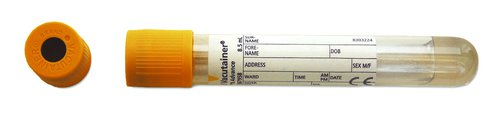
- Adults: 5 mL venous blood in a gold-top SST tube (or rust top in acute admissions).
💡 Clinical Uses
- Nutritional status: Low albumin suggests chronic undernutrition but is nonspecific (also ↓ in inflammation).
- Calcium correction: Used in adjusted calcium calculations when interpreting bone profile.
- Therapy: Albumin infusion in specific scenarios (e.g. after large-volume paracentesis, spontaneous bacterial peritonitis with renal risk, hepatorenal syndrome).
- Prognosis: Part of Child-Pugh score for cirrhosis and used as a prognostic marker in nephrology and oncology.
🌟 Summary: Albumin is central to fluid balance and drug transport. Low albumin is common in chronic disease, sepsis, and protein loss, but is not specific for malnutrition. Interpret results in the full clinical context, especially liver and renal function.
| The content on this website is provided for educational and informational purposes only to support exam preparation (e.g., MLA, MRCP, USMLE) and learning. This is NOT medical advice, diagnosis, treatment, or professional guidance. It does not replace consultation with a qualified healthcare professional, official guidelines (e.g., NICE, GMC, BNF), or supervised clinical practice. Always verify information with current, authoritative sources. Makindo and its contributors accept no liability for any reliance on this content, including errors, omissions, or any resulting harm, loss, or consequences. By using this site, you agree to these terms. |
|
|
Categories
- About
- Acute Medicine
- Anaesthetics and Critical Care
- Anatomy
- Anatomy and Physiology
- Biochemistry
- Book
- Cardiology
- Collections
- CompSci
- Crib Sheets
- Critical care
- Dental
- Dermatology
- Differentials
- Drugs
- ENT
- Electrocardiogram
- Embryology
- Emergency Medicine
- Endocrinology
- Ethics
- Foundation Doctors
- GCSE
- Gastroenterology
- General Practice
- Genetics
- Geriatric Medicine
- Geriatrics
- Guidelines
- Haematology
- Hepatology
- Immunology
- Infectious Diseases
- Infographic
- Investigations
- Lists
- MRCP
- Mandatory Training
- Medical Students
- Microbiology
- Nephrology
- Neurology
- Neurosurgery
- Nutrition
- OSCE
- Obstetrics Gynaecology
- Oncology
- Ophthalmology
- Oral Medicine and Dentistry
- Orthopaedics
- Paediatrics
- Palliative
- Palliative Care
- Pathology
- Pharmacology
- Physiology
- Procedures
- Psychiatry
- Public Health
- Radiology
- Respiratory
- Resuscitation
- Revision Topics
- Rheumatology
- Statistics and Research
- Stroke
- Surgery
- Toxicology
- Trauma and Orthopaedics
- USMLE
- Urology
- Vascular Surgery