
| Download the amazing global Makindo app: ✅ Means NICE/National Guidelines 2026 compliant Android | Apple | |
|---|---|
| MEDICAL DISCLAIMER: Educational use only. Not for diagnosis or management. See below for full disclaimer. |
Mask-Related Acne (Maskne)
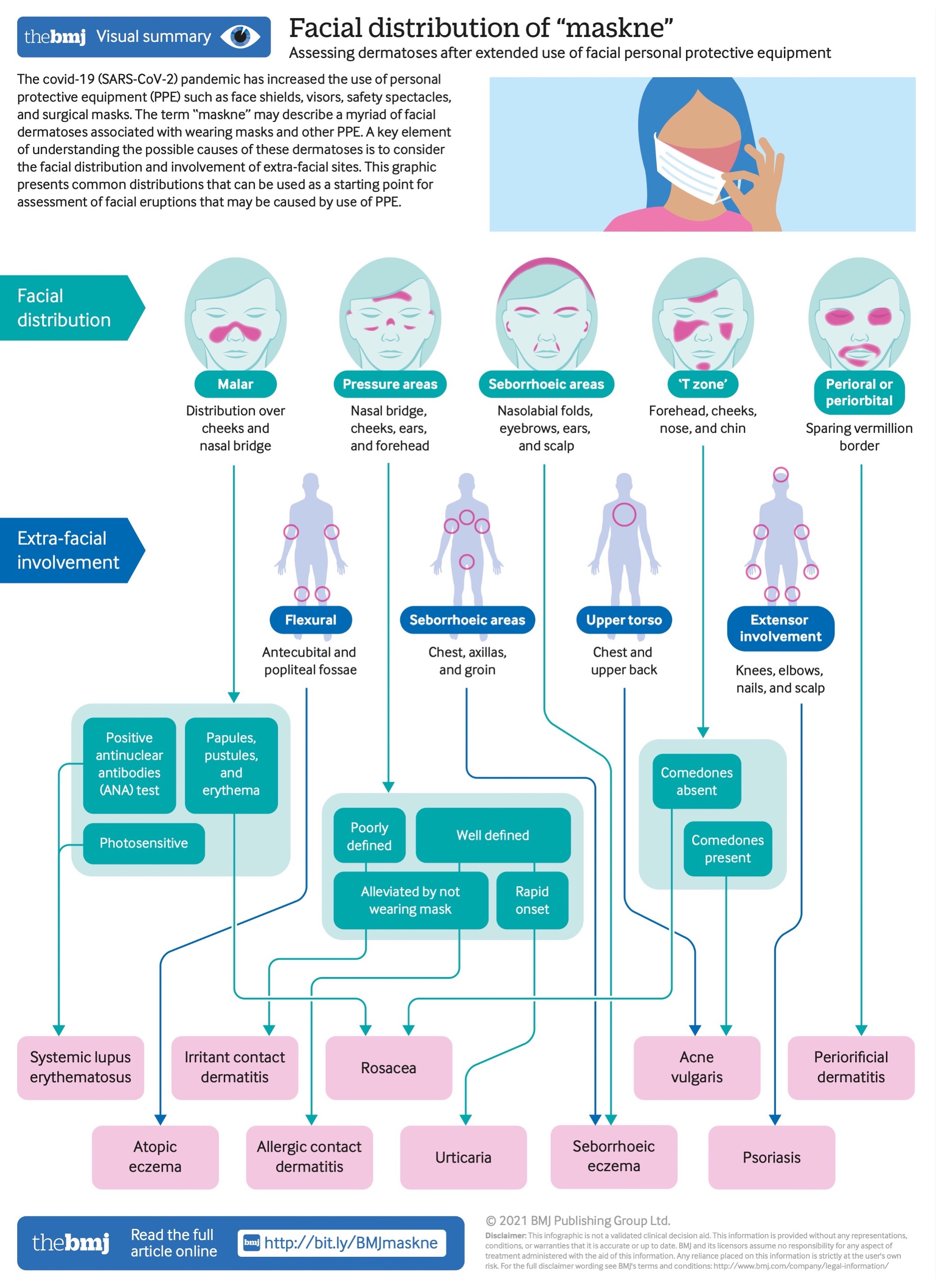
Maskne refers to acneiform eruptions that develop in areas covered by face masks, particularly the cheeks, chin, jawline, and perioral region. It results from a combination of mechanical friction, increased humidity, and altered skin microbiome under occlusion. During the COVID-19 pandemic, maskne became highly prevalent among healthcare workers and the general public. In UK clinical practice, it is now recognised as a subtype of acne mechanica requiring targeted prevention and treatment.
📌 Causes and Risk Factors
-
🧵 Mechanical Friction
- Repeated rubbing causes follicular irritation and microtrauma
- Disrupts the stratum corneum barrier
-
💧 Occlusion and Humidity
- Trapped moisture increases sebum hydration
- Promotes follicular blockage
-
🦠 Microbiome Changes
- Overgrowth of Cutibacterium acnes
- Increased Staphylococcus species
-
🧴 Skincare and Cosmetics
- Comedogenic moisturisers and makeup
- Heavy occlusive products under masks
-
⚠️ Patient Factors
- Pre-existing acne or rosacea
- Oily skin, sweating, long mask use
🧠 Pathophysiology
Maskne develops through the classical acne pathway of follicular occlusion, bacterial proliferation, and inflammation. Prolonged mask-wearing increases temperature and humidity, leading to swelling of keratinocytes and narrowing of pilosebaceous ducts. This promotes comedone formation and supports Cutibacterium acnes growth. Mechanical stress further induces local cytokine release, amplifying inflammatory papules and pustules.
🔍 Clinical Features
- Comedones, papules, and pustules in mask-covered areas
- Predominantly on chin, cheeks, and jawline
- Associated erythema and irritation
- May coexist with contact dermatitis or rosacea
- Fluctuates with duration of mask use
🧪 Assessment
- History of mask duration, type, and hygiene
- Review skincare and cosmetic products
- Assess severity (mild, moderate, inflammatory)
- Exclude perioral dermatitis and allergic dermatitis
- Consider secondary infection if crusting present
💊 Management and Treatment
-
🧼 Skin Care Measures
- Gentle cleanser twice daily
- Use non-comedogenic moisturisers
- Avoid heavy makeup under masks
-
😷 Mask Hygiene
- Change disposable masks regularly
- Wash reusable masks daily
- Ensure good fit without excess friction
-
💊 Topical Therapies
- Benzoyl peroxide (low strength initially)
- Topical retinoids (adapalene)
- Azelaic acid for sensitive skin
-
📈 Moderate–Severe Disease
- Topical antibiotic combinations (short-term)
- Oral antibiotics if widespread
- Dermatology referral if resistant
🛡️ Prevention Strategies
- Apply light moisturiser 30 minutes before masking
- Take safe “mask breaks” where appropriate
- Use silk or cotton inner layers if tolerated
- Avoid fragranced or alcohol-based products
- Maintain consistent skincare routine
🚨 Red Flags
- Severe nodulocystic acne
- Scarring or post-inflammatory hyperpigmentation
- Features of infection
- Significant psychological distress
- Treatment failure after 8–12 weeks
📚 Key Learning Points
Maskne is best understood as acne mechanica driven by occlusion, friction, and microbiome disruption. Prevention through skin barrier support and mask hygiene is as important as pharmacological treatment. Topical therapy should be introduced gradually to minimise irritant dermatitis, which can worsen symptoms. In UK practice, early optimisation of skincare and appropriate escalation can prevent chronic scarring and reduce patient morbidity.
| The content on this website is provided for educational and informational purposes only to support exam preparation (e.g., MLA, MRCP, USMLE) and learning. This is NOT medical advice, diagnosis, treatment, or professional guidance. It does not replace consultation with a qualified healthcare professional, official guidelines (e.g., NICE, GMC, BNF), or supervised clinical practice. Always verify information with current, authoritative sources. Makindo and its contributors accept no liability for any reliance on this content, including errors, omissions, or any resulting harm, loss, or consequences. By using this site, you agree to these terms. |
|
|
Categories
- About
- Acute Medicine
- Anaesthetics and Critical Care
- Anatomy
- Anatomy and Physiology
- Biochemistry
- Book
- Cardiology
- Collections
- CompSci
- Crib Sheets
- Critical care
- Dental
- Dermatology
- Differentials
- Drugs
- ENT
- Electrocardiogram
- Embryology
- Emergency Medicine
- Endocrinology
- Ethics
- Foundation Doctors
- GCSE
- Gastroenterology
- General Practice
- Genetics
- Geriatric Medicine
- Geriatrics
- Guidelines
- Haematology
- Hepatology
- Immunology
- Infectious Diseases
- Infographic
- Investigations
- Lists
- MRCP
- Mandatory Training
- Medical Students
- Microbiology
- Nephrology
- Neurology
- Neurosurgery
- Nutrition
- OSCE
- Obstetrics Gynaecology
- Oncology
- Ophthalmology
- Oral Medicine and Dentistry
- Orthopaedics
- Paediatrics
- Palliative
- Palliative Care
- Pathology
- Pharmacology
- Physiology
- Procedures
- Psychiatry
- Public Health
- Radiology
- Respiratory
- Resuscitation
- Revision Topics
- Rheumatology
- Statistics and Research
- Stroke
- Surgery
- Toxicology
- Trauma and Orthopaedics
- USMLE
- Urology
- Vascular Surgery