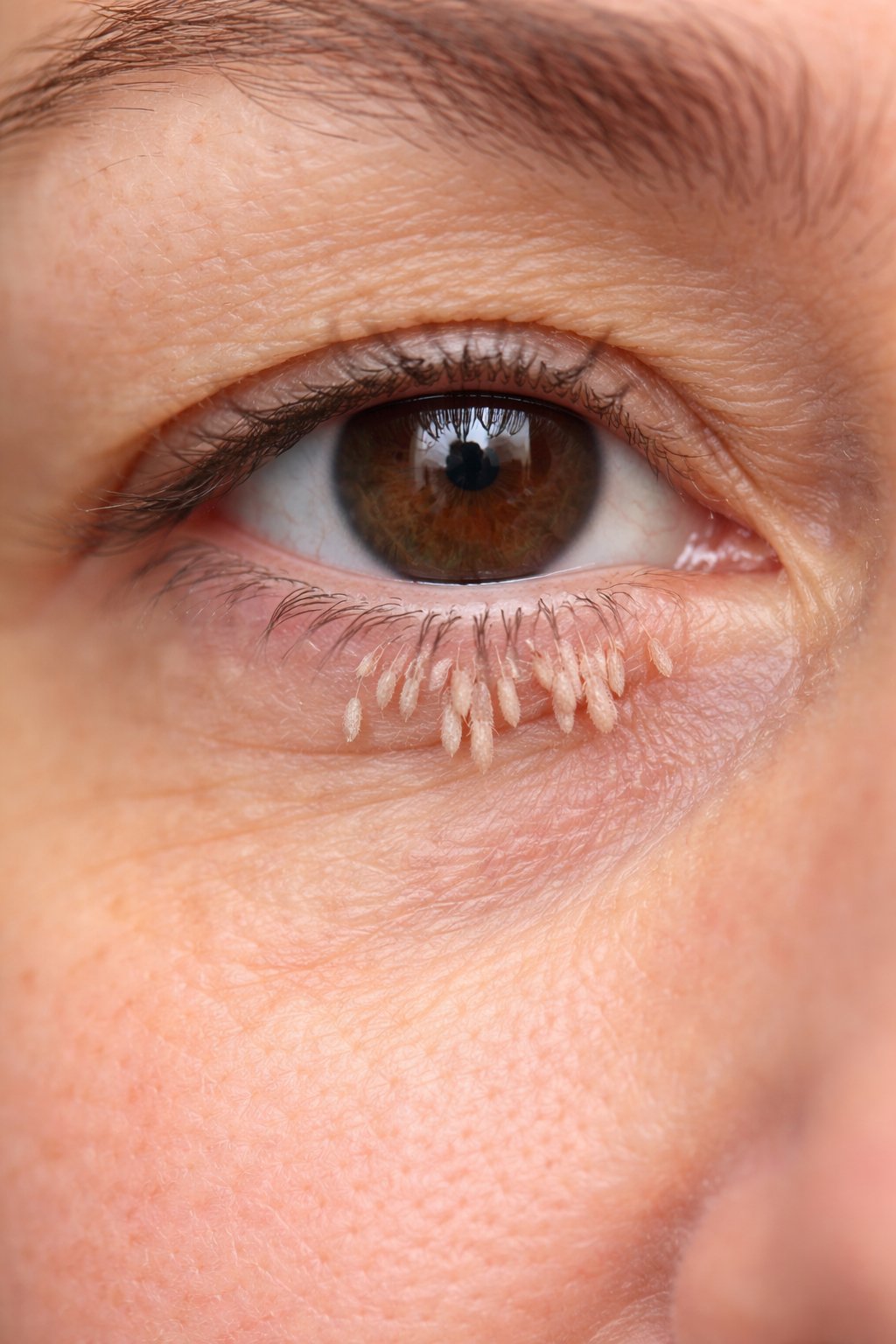
Phthiriasis palpebrarum ✅
🦠 Phthiriasis palpebrarum = infestation of the eyelashes and eyelids by the pubic louse (Pthirus pubis). Often misdiagnosed as blepharitis or allergic conjunctivitis. High index of suspicion is key, especially in adults with concurrent pubic infestation.
📖 Overview
- Rare condition in the UK, typically associated with close contact, including sexual transmission.
- Infestation is caused by Pthirus pubis, a small crab-shaped louse adapted to coarse hair (eyelashes, eyebrows, pubic region).
- Can be seen in children, elderly, and immunocompromised; consider potential neglect or abuse in children.
🧠 Pathophysiology
- Lice attach to eyelashes using claws, feed on blood several times per day, and lay nits (eggs) at the base of lashes.
- Mechanical irritation and pruritus → rubbing → excoriation, secondary bacterial infection, conjunctival inflammation.
- Infestation does not generally spread systemically, but is highly contagious via direct contact or fomites (towels, bedding).
🔍 Clinical Features
- 👁️ Itching and burning of the eyelids, worse at night.
- 🔹 Erythema and crusting of eyelid margins.
- 🕵️ Visible lice or nits on eyelashes (magnifying lens may help).
- 👶 Children: consider sexual abuse if isolated infestation without pubic lice elsewhere.
- ⚠️ Rarely, secondary bacterial conjunctivitis may develop.
🧪 Investigations
- 👀 Clinical diagnosis is primary; slit-lamp examination can confirm lice/nits.
- 🌡️ Check for concurrent pubic or body lice infestation.
- 🧬 STI screen may be considered in adults due to sexual transmission association.
💊 Management (NICE-aligned, UK)
- 🛁 Mechanical removal: carefully trim or tweeze infested eyelashes under magnification.
- 🧴 Topical therapy:
- Permethrin 1% cream or malathion 0.5% applied carefully to lashes, avoiding ocular surface contact.
- Petroleum jelly (Vaseline) applied to lash margin 2–3 times daily for 10 days can suffocate lice, particularly in children or those unable to tolerate insecticides.
- 🧹 Bedding, towels, and clothing should be washed in hot water or sealed in bags for 48 hours to prevent reinfestation.
- 💡 Advise avoiding direct eye contact with others until treated.
- 👨⚕️ Consider referral to ophthalmology if severe or refractory, or if mechanical removal is difficult.
- 👩⚕️ Children: follow safeguarding procedures if sexual abuse suspected.
🚩 Complications
- Secondary bacterial blepharitis/conjunctivitis.
- Corneal irritation or superficial keratitis if scratching is excessive.
- Psychosocial distress, particularly in adults due to sexual transmission concerns.
🗣️ Patient Advice (UK)
“You have tiny lice on your eyelashes, which cause itch and irritation. These are usually transmitted via close contact. Treatment involves careful removal of the lice, ointments to kill remaining lice, and cleaning of bedding and towels. If you have pubic lice elsewhere or sexual contacts, they may also need treatment.”
📚 Key Learning Points
- Phthiriasis palpebrarum is rare and often misdiagnosed as blepharitis.
- High clinical suspicion is essential; always examine pubic area in adults.
- Mechanical removal + topical therapy is first-line; referral if severe, refractory, or in children where abuse is suspected.
- Safe cleaning of fomites prevents reinfestation.