Related Subjects:
|Fever in a traveller
|Malaria Falciparum
|Malaria Non Falciparum
|Viral Haemorrhagic Fevers (VHF)
|Lassa fever
|Dengue
|Marburg virus disease
|AIDS HIV
|Yellow fever
|Ebola Virus
|Leptospirosis
|Crimean-Congo haemorrhagic fever
|African Trypanosomiasis (Sleeping sickness)
|American Trypanosomiasis (Chagas Disease)
|Incubation Periods
|Notifiable Diseases UK
|Helvetica Spotted fever
|Rocky Mountain Spotted Fever
🧾 About
- Crimean-Congo haemorrhagic fever (CCHF) is a severe viral haemorrhagic fever with a case fatality rate up to 40%.
- First described in the Crimea (1944) and later Congo (1956) → hence the name.
- ⚠️ High-risk infection for healthcare workers → strict barrier precautions required.
🦠 Aetiology
- Organism: Crimean-Congo haemorrhagic fever virus (CCHFV), a Nairovirus of the Bunyaviridae family.
- Vectors: Mainly Hyalomma marginatum, Rhipicephalus bursa ticks.
- Transmission: Tick bite, crushing infected ticks, or human-to-human via blood/secretions.
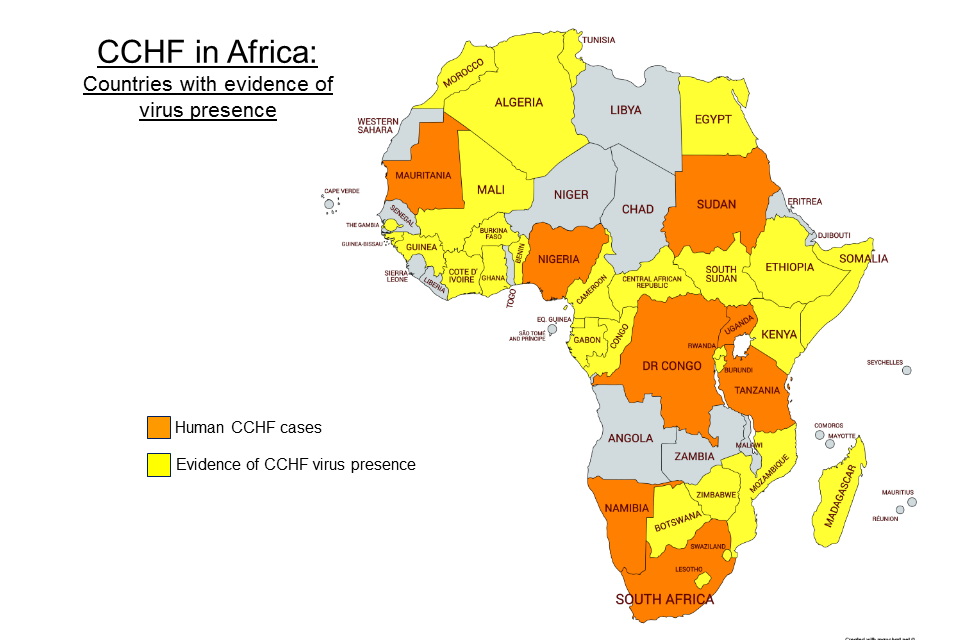
- Geography: Endemic in Southern Asia, Northern Africa, Eastern Europe, Middle East.
🩺 Clinical Features
- Incubation:
- Tick bite → 1–3 days
- Blood contact → 5–6 days
- Symptoms:
- Fever, rigors, severe headache, myalgia, photophobia
- GI upset: nausea, vomiting, diarrhoea, abdominal pain
- Neuro: somnolence, depression, lassitude
- Complications: hepatomegaly, renal failure, lymphadenopathy, tachycardia
- Rash: Petechiae on mucosa/skin → risk of severe bleeding
🧾 Differentials
- Other viral haemorrhagic fevers (e.g. Ebola, Lassa, Marburg)
- Severe malaria
- Acute HIV seroconversion
- Leptospirosis, typhoid
🔍 Investigations
- Serology: ELISA (IgM/IgG)
- PCR: Viral RNA detection (reference labs only)
- Other: CBC (thrombocytopenia, leukopenia), raised liver enzymes, deranged coagulation profile
- ⚠️ Testing only in high-level biosafety labs (BSL-4).
💊 Management
- Isolation: Strict barrier precautions for staff; minimise invasive procedures.
- Supportive Care: Fluids, electrolytes, blood products (platelets, FFP), careful haemodynamic support.
- Antivirals: Ribavirin may reduce mortality if given early; used in outbreaks or high-risk exposures.
- Renal Support: Dialysis if renal failure develops.
- Symptomatic: Paracetamol for fever/pain (avoid NSAIDs due to bleeding risk).
- Monitoring: FBC, LFTs, renal function, coagulation profile daily.
💡 Teaching Pearls
- Red flag for exams: Fever + haemorrhage + tick exposure/travel to endemic area → think CCHF.
- Differentiator: Unlike malaria, CCHF often has bleeding diathesis + hepatomegaly + profound thrombocytopenia.
- Nosocomial outbreaks have occurred in healthcare workers → PPE and barrier nursing are critical.
- No licensed vaccine currently available (human or animal).
📚 References
