
| Download the amazing global Makindo app: ✅ Means NICE/National Guidelines 2026 compliant Android | Apple | |
|---|---|
| MEDICAL DISCLAIMER: Educational use only. Not for diagnosis or management. See below for full disclaimer. |
Rosacea ✅
Related Subjects: | Nikolsky's sign | Koebner phenomenon | Erythema Multiforme | Pyoderma gangrenosum | Erythema Nodosum | Dermatitis Herpetiformis | Lichen Planus | Acanthosis Nigricans | Rosacea | Acne Vulgaris | Alopecia | Vitiligo | Urticaria | Basal Cell Carcinoma | Malignant Melanoma | Squamous Cell Carcinoma | Mycosis Fungoides (Sezary Syndrome) | Xeroderma pigmentosum | Bullous Pemphigoid | Pemphigus Vulgaris | Seborrheic Dermatitis | Pityriasis/Tinea versicolor infections | Pityriasis rosea | Scabies | Dermatomyositis | Toxic Epidermal Necrolysis | Stevens-Johnson Syndrome | Atopic Eczema/Atopic Dermatitis | Psoriasis
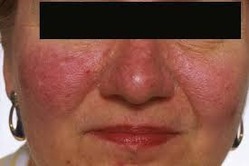
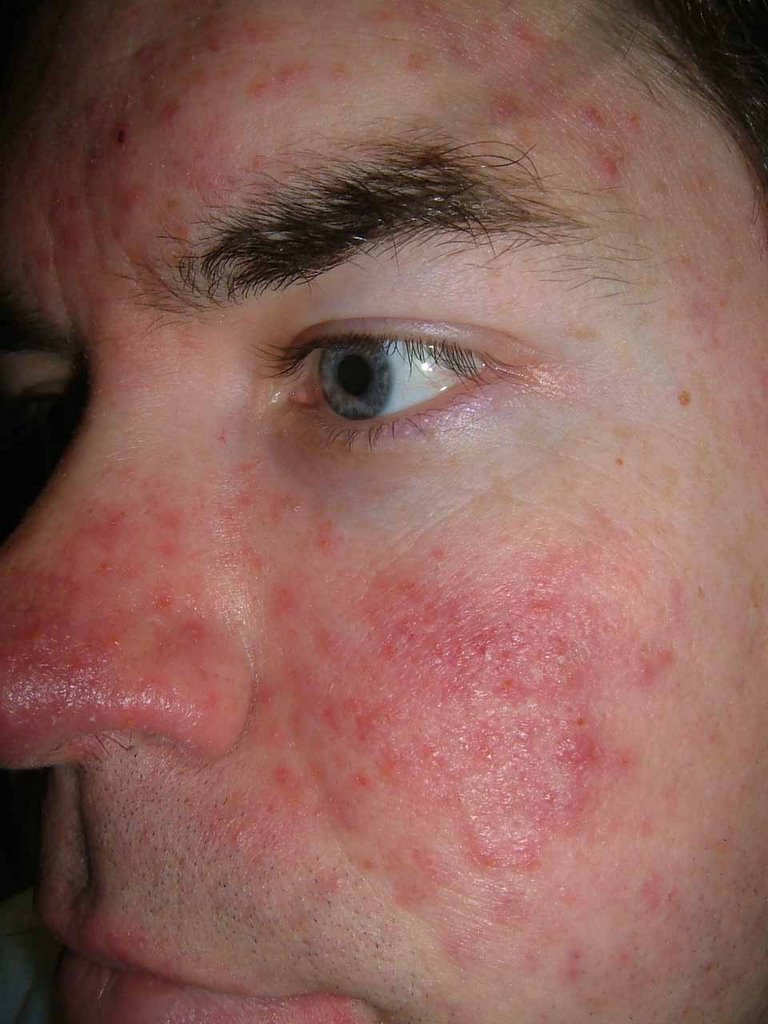
🌹 Rosacea is a chronic, relapsing inflammatory skin disorder affecting the central face. It causes flushing, persistent erythema, telangiectasia, papules and pustules, but unlike acne vulgaris there are usually no comedones 🚫. It is not infectious 🦠❌, although Demodex mites, innate immune activation and vascular dysregulation may contribute.
📖 Overview
- 👩🦳 Usually affects adults, especially from middle age onwards.
- 🎯 Common sites: cheeks, nose, chin and central forehead.
- 🔥 Symptoms may include burning, stinging, skin sensitivity and flushing.
- 🔁 Rosacea is chronic and relapsing, so treatment aims to control symptoms rather than cure the condition.
- 💊 Topical steroids can worsen rosacea and may cause steroid-induced rosacea-like dermatitis.
🧬 Pathophysiology
- 💓 Vascular dysregulation: exaggerated vasodilation causes flushing and persistent erythema.
- 🔥 Innate immune activation: inflammatory mediators drive papules, pustules and skin sensitivity.
- 🕷 Demodex folliculorum: increased mite density may trigger inflammation in some patients.
- 🧠 Neurovascular sensitivity: heat, alcohol, spicy foods and stress can provoke flushing, burning or stinging.
- 👃 Chronic inflammation: may lead to sebaceous gland and connective tissue overgrowth, causing phymatous change such as rhinophyma.
🚩 Common Triggers
- ☀️ Sunlight and UV exposure
- 🔥 Heat, hot baths, saunas and hot weather
- 🍷 Alcohol
- ☕ Hot drinks
- 🌶 Spicy foods
- 🏃 Exercise
- 😰 Emotional stress
- ❄️ Cold wind or temperature extremes
- 💊 Topical corticosteroids, irritating cosmetics and some vasodilating drugs
🔍 Clinical Features
- 🌡 Flushing: episodic facial redness, often triggered by heat, alcohol or emotion.
- 🔴 Persistent erythema: fixed central facial redness.
- 🩸 Telangiectasia: visible small blood vessels on the face.
- ⚪ Papules and pustules: inflammatory lesions without comedones.
- 🧴 Skin sensitivity: burning, stinging, dryness or intolerance of skincare products.
- 👃 Phymatous change: thickened irregular skin, most classically rhinophyma.
- 👁 Ocular symptoms: gritty eyes, blepharitis, conjunctival redness, dry eye, photophobia or visual disturbance.
📊 Clinical Patterns
- 🌡 Erythematotelangiectatic rosacea: flushing, persistent erythema and telangiectasia.
- 🔴 Papulopustular rosacea: papules and pustules on a background of erythema; no comedones.
- 👃 Phymatous rosacea: thickened skin and sebaceous overgrowth, often affecting the nose.
- 👁 Ocular rosacea: eyelid inflammation, dry eye, conjunctivitis or keratitis.
🧪 Diagnosis
- ✅ Diagnosis is usually clinical.
- 🔍 Look for central facial erythema, flushing, telangiectasia, papules/pustules and ocular features.
- 📝 Ask about triggers, topical steroid use, skincare products and eye symptoms.
- 🚫 Key distinction from acne vulgaris: rosacea usually has no comedones.
- ⚖️ Consider alternative diagnoses if atypical: acne vulgaris, seborrhoeic dermatitis, periorificial dermatitis, lupus erythematosus, photosensitivity reactions or drug-induced eruptions.
💊 Management - NICE CKS Aligned
- 🌿 General measures for all patients:
- 🧼 Use gentle skin cleansers and avoid abrasive or alcohol-based products.
- ☀️ Use daily broad-spectrum sunscreen, ideally SPF 30 or above.
- 🧭 Identify and avoid personal triggers where practical.
- 💊 Avoid topical corticosteroids on the face unless specifically advised.
- ⏳ Explain that improvement often takes several weeks and relapse is common.
- 🔴 Persistent facial erythema:
- 💧 Consider topical brimonidine gel for troublesome persistent erythema.
- ⏱ Warn that benefit is temporary and redness may recur when the effect wears off.
- ⚠️ Use caution in people with significant cardiovascular disease, cerebral insufficiency, depression, or hepatic/renal impairment.
- ✨ Laser or intense pulsed light therapy may help telangiectasia or persistent erythema, but NHS availability may be limited.
- ⚪ Mild to moderate papulopustular rosacea:
- 💊 Consider topical ivermectin, topical metronidazole or azelaic acid.
- ⚖️ Choice depends on local formulary, tolerability, pregnancy status and patient preference.
- 📅 Review response after an adequate trial, commonly around 6–12 weeks.
- 🔥 Moderate to severe papulopustular rosacea:
- 💊 Consider adding an oral tetracycline such as doxycycline, usually for a time-limited course.
- ⬇️ Step down to topical maintenance once controlled where possible.
- 🤰 Avoid tetracyclines in pregnancy, breastfeeding and children under 12 years.
- 💊 Consider erythromycin if tetracyclines are unsuitable, following local guidance.
- 🚑 Severe, refractory or recurrent disease:
- 👨⚕️ Consider referral to dermatology.
- 💊 Specialist options may include low-dose oral isotretinoin or procedural treatment for phymatous disease.
👁 Ocular Rosacea
- ❓ Ask specifically about gritty eyes, dry eyes, red eyes, eyelid crusting, photophobia, pain or visual disturbance.
- 🧼 For mild symptoms: advise lid hygiene and lubricating eye drops.
- 💊 Oral tetracyclines may be used for significant blepharitis or meibomian gland disease where appropriate.
- 🚨 Urgent ophthalmology / same-day eye assessment: eye pain, photophobia, reduced vision, corneal opacity, suspected keratitis or marked unilateral redness.
- 👁 Refer to ophthalmology if ocular symptoms persist despite initial treatment.
🚑 When to Refer
- ❓ Diagnostic uncertainty or atypical features.
- 🔥 Severe, refractory or recurrent rosacea despite appropriate treatment.
- 👃 Phymatous disease such as rhinophyma.
- 🧠 Significant psychological distress or major impact on quality of life.
- 👁 Ocular red flags: pain, photophobia, reduced vision or suspected corneal involvement.
- 🧒 Children with suspected rosacea, as this is uncommon and needs specialist assessment.
🖼 Images
📝 Exam Pearls
- 🚫 No comedones helps distinguish rosacea from acne vulgaris.
- 🌡 Flushing often precedes fixed erythema and papulopustular disease.
- 💊 Topical steroids can worsen rosacea.
- 👃 Rhinophyma is a phymatous complication, seen more often in men.
- 👁 Ocular rosacea can threaten sight if keratitis develops.
- ☀️ Sunscreen and trigger avoidance are core management, not optional extras.
🧠 Teaching Note
🌹 Rosacea is best thought of as a disorder of vascular reactivity plus cutaneous inflammation. This explains why flushing triggers such as heat, alcohol and spicy foods worsen erythema, while inflammatory lesions respond to topical anti-inflammatory treatments or oral tetracyclines. 🚫 The absence of comedones is clinically useful because acne vulgaris is primarily follicular obstruction with sebum and comedone formation, whereas rosacea is more neurovascular and inflammatory. 👁 Always ask about eye symptoms because ocular rosacea may be missed unless specifically screened for.
📚 References & NICE Resources
- NICE CKS – Rosacea
- NICE CKS – Rosacea management
- DermNet NZ – Rosacea
- Primary Care Dermatology Society – Rosacea

| The content on this website is provided for educational and informational purposes only to support exam preparation (e.g., MLA, MRCP, USMLE) and learning. This is NOT medical advice, diagnosis, treatment, or professional guidance. It does not replace consultation with a qualified healthcare professional, official guidelines (e.g., NICE, GMC, BNF), or supervised clinical practice. Always verify information with current, authoritative sources. Makindo and its contributors accept no liability for any reliance on this content, including errors, omissions, or any resulting harm, loss, or consequences. By using this site, you agree to these terms. |
|
|
Categories
- About
- Acute Medicine
- Anaesthetics and Critical Care
- Anatomy
- Anatomy and Physiology
- Biochemistry
- Book
- Cardiology
- Collections
- CompSci
- Crib Sheets
- Critical care
- Dental
- Dermatology
- Differentials
- Drugs
- ENT
- Electrocardiogram
- Embryology
- Emergency Medicine
- Endocrinology
- Ethics
- Foundation Doctors
- GCSE
- Gastroenterology
- General Practice
- Genetics
- Geriatric Medicine
- Geriatrics
- Guidelines
- Haematology
- Hepatology
- Immunology
- Infectious Diseases
- Infographic
- Investigations
- Lists
- MRCP
- Mandatory Training
- Medical Students
- Microbiology
- Nephrology
- Neurology
- Neurosurgery
- Nutrition
- OSCE
- Obstetrics Gynaecology
- Oncology
- Ophthalmology
- Oral Medicine and Dentistry
- Orthopaedics
- Paediatrics
- Palliative
- Palliative Care
- Pathology
- Pharmacology
- Physiology
- Procedures
- Psychiatry
- Public Health
- Radiology
- Respiratory
- Resuscitation
- Revision Topics
- Rheumatology
- Statistics and Research
- Stroke
- Surgery
- Toxicology
- Trauma and Orthopaedics
- USMLE
- Urology
- Vascular Surgery