Related Subjects:
|Cellulitis
|Impetigo
|Pyoderma gangrenosum
|Pemphigus Vulgaris
|Toxic Epidermal Necrolysis
|Stevens-Johnson Syndrome
|Necrotising fasciitis
|Gas Gangrene (Clostridium perfringens)
|Anatomy of Skin
|Skin Pathology and lesions
|Skin and soft tissue and bone infections
|Lymphangitis
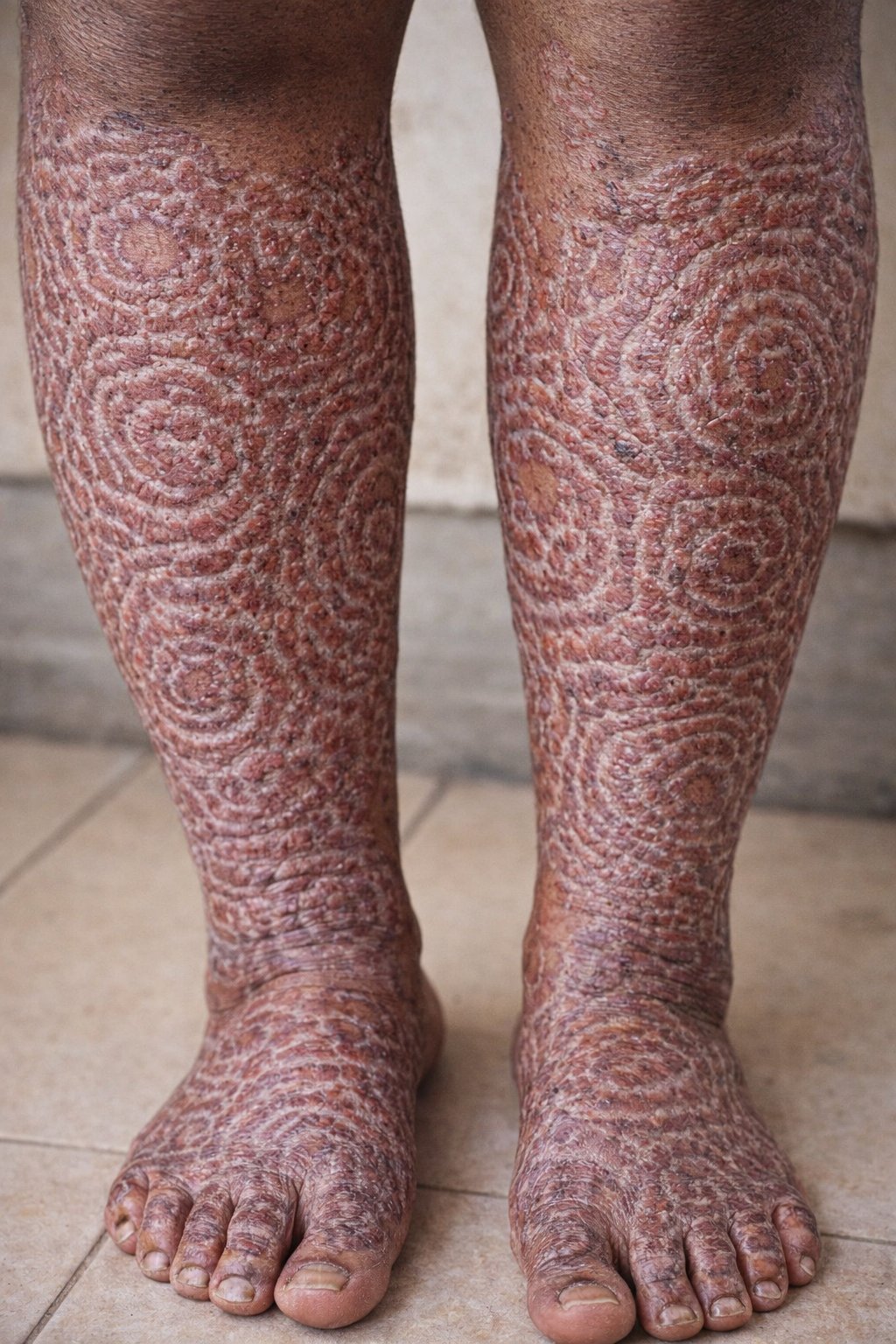
🌿 Tinea imbricata is a chronic, superficial dermatophyte infection caused by Trichophyton concentricum.
🔄 It produces characteristic concentric, overlapping rings of scale, giving a “wood-grain” or “imbricated” appearance.
🌍 It is endemic in tropical regions (Pacific Islands, Southeast Asia, Central/South America) and often reflects a degree of host immune tolerance.
📖 Definition
- A form of tinea corporis with distinctive concentric scaling rings.
- Caused specifically by Trichophyton concentricum.
🦠 Aetiology
- Dermatophyte fungus: Trichophyton concentricum
- Infection remains confined to the stratum corneum
- Associated with cell-mediated immune dysfunction (reduced response to the organism)
⚠️ Risk Factors
- 🌍 Residence in tropical/endemic regions
- 👨👩👧 Close contact / household spread
- 🧬 Genetic susceptibility (familial clustering)
- 🦠 Poor hygiene / overcrowding
🔍 Clinical Features
- 🔄 Concentric, scaly rings spreading outward
- 🎯 “Wood-grain” or imbricated pattern
- 😖 Pruritus (itching)
- 🧍 Commonly affects trunk and limbs
- ⏳ Chronic, slowly progressive course
🧪 Investigations
- 🔬 Skin scrapings + KOH microscopy → hyphae
- 🧫 Fungal culture (confirms species)
- 🧠 Diagnosis often clinical in endemic areas
💊 Management – Detailed Treatment
- ⚠️ Systemic therapy is usually required – topical treatment alone is often insufficient due to chronicity and widespread involvement.
🧴 First-line: Oral antifungals
- Terbinafine (fungicidal; inhibits squalene epoxidase)
- Adult dose: 250 mg once daily
- Duration: typically 2–4 weeks (may need longer in extensive disease)
- Advantages: high cure rates, shorter courses
- Itraconazole (fungistatic; inhibits ergosterol synthesis)
- Adult dose: 100–200 mg daily
- Duration: 2–4 weeks (longer if relapse)
- Useful alternative if terbinafine not tolerated
- Griseofulvin (older option)
- Requires longer courses (4–8 weeks+)
- Less effective and more relapse compared to terbinafine
🧴 Adjunct topical therapy
- Topical antifungals (e.g. terbinafine cream, azoles) may:
- Reduce fungal load
- Limit spread
- Improve symptoms (itching)
- 👉 Rarely sufficient as monotherapy in tinea imbricata
🧪 Monitoring & safety
- 🩸 Liver function tests (LFTs) before and during prolonged oral therapy
- ⚠️ Terbinafine and itraconazole are hepatotoxic (rare but important)
- 💊 Check for drug interactions (especially itraconazole – CYP3A4 inhibitor)
🔁 Recurrent / refractory disease
- Longer or repeated courses of oral antifungals may be required
- Consider:
- Reinfection from contacts
- Incomplete adherence
- Underlying immune tolerance
- 👉 Treat close household contacts if recurrent
🧼 Supportive & preventive measures
- 🧴 Maintain good skin hygiene
- 👕 Avoid sharing clothing/towels
- 🧼 Regular washing of clothes and bedding
- 🌿 Treat co-existing fungal infections (e.g. tinea pedis)
⚠️ Special situations
- Children: griseofulvin often preferred due to safety profile
- Pregnancy: avoid systemic antifungals where possible → specialist advice
- Immunocompromised: may need prolonged therapy and closer follow-up
🧠 Exam Tips
- 📌 “Concentric rings” = tinea imbricata (very distinctive)
- 📌 Caused by Trichophyton concentricum (unique organism)
- 📌 Often requires oral treatment (unlike simple tinea corporis)
- 📌 Seen in tropical populations → geography is a key clue