
| Download the amazing global Makindo app: ✅ Means NICE/National Guidelines 2026 compliant Android | Apple | |
|---|---|
| MEDICAL DISCLAIMER: Educational use only. Not for diagnosis or management. See below for full disclaimer. |
Basic Neuroscience
Related Subjects: |Brain Herniation syndromes |Haemorrhagic stroke |Traumatic Head/Brain Injury |Acute Hydrocephalus |Epidural Haematoma |Subdural haematoma |Basic Neuroscience |Medulla Oblongata |Midbrain |Pons |Caudate Nucleus |Putamen and Globus Pallidus |Cerebral Cortex |Internal Capsule |Cavernous sinus |Basal Ganglia
🧠 Cells in the CNS
The brain contains ~1011 neurons and even more glial cells (outnumbering neurons 10–50×). 🧬 About 40% of the human genome contributes to brain development & function. ⚡ Neurons rely on continuous ATP from oxidative phosphorylation → brain is highly metabolic.
CNS = neurons + glial cells. Both form the neurovascular unit, essential in stroke pathophysiology.
🧩 Neuronal Cells
Neurons = “information processors” → receive input, integrate, and send output signals. Grey matter = soma clusters (cortex, nuclei, brainstem, cerebellum).
Key parts:
- 🟢 Soma: nucleus & organelles.
- 🌳 Dendrites: receive input.
- ⚡ Axon hillock: AP initiation.
- ➡️ Axon: conducts impulse.
- 📤 Terminals: release neurotransmitters at synapses.
🔄 Transport: - Anterograde → soma → terminal. - Retrograde → terminal → soma (used by rabies, tetanus).
 🧪 Non-Neuronal Cells (Glia)
Glia = “glue” but vital support + barrier + repair functions:
- 🌟 Astrocytes: scaffold, ion buffering, neurotransmitter recycling, maintain BBB.
- 🛡️ Microglia: immune cells, phagocytose debris & pathogens, regulate inflammation.
- 💧 Ependymal cells: line ventricles, circulate CSF, tumour origin (ependymoma).
- 🧵 Oligodendrocytes: myelinate CNS axons → saltatory conduction. One cell → many axons.
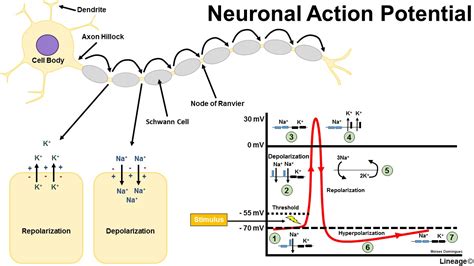
⚡ Cell Electrophysiology
- Resting potential: ~ –70 mV (Na⁺/K⁺ pump + selective permeability).
- AP: Na⁺ influx → depolarisation; K⁺ efflux → repolarisation.
- Myelination → saltatory conduction at nodes of Ranvier. ❌ Lost in MS → conduction slowed.
 🔄 Synapses, Neurotransmitters & Receptors
- 🔥 Glutamate: excitatory (NMDA, AMPA).
- 🛑 GABA: inhibitory (GABAA, GABAB).
- ⚡ Acetylcholine: nicotinic (ionotropic), muscarinic (metabotropic).
- 🎭 Monoamines: dopamine, serotonin, norepinephrine → mood, cognition, arousal.
🧠 Synaptic plasticity (LTP/LTD) = basis of learning & memory.
💓 Brain Physiology & Cerebral Perfusion
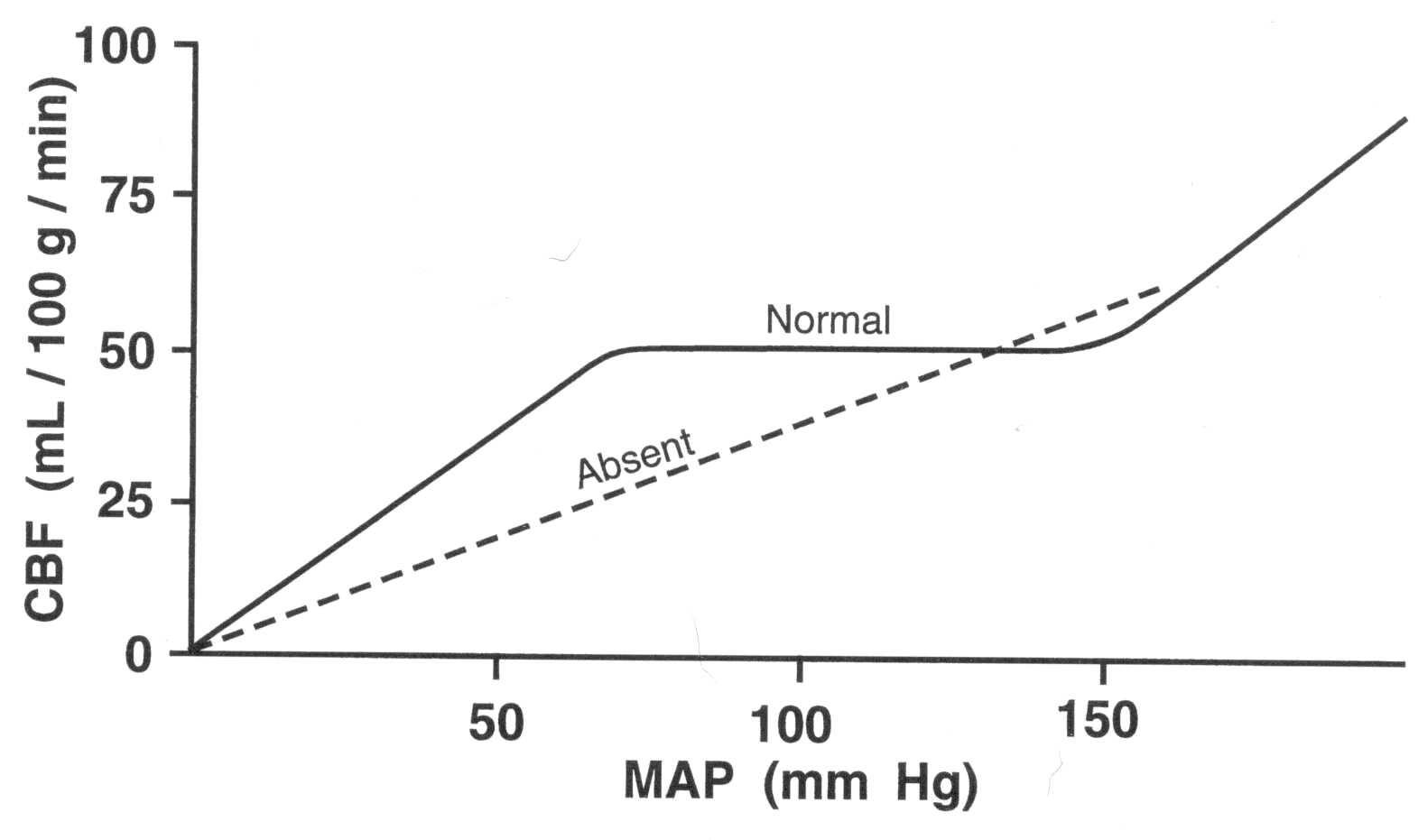
- Brain = 1–2% body weight but needs 15% cardiac output + 20% O₂.
- Metabolism: glucose oxidation, minimal reserves.
- Autoregulation adjusts flow to BP, CO₂, pH → fails in stroke.
 🩸 Stroke Pathophysiology
Sudden interruption of cerebral blood flow → neuronal death.
| 🧠 Three Zones Post-Stroke | |
|---|---|
| ☠️ Irreversible core | Necrosis from Ca²⁺ influx, osmotic failure. |
| 🟡 Penumbra | Salvageable if reperfused quickly. |
| 🟢 Mild hypoperfusion | Viable but impaired; oxidative stress risk. |
⏱️ Time is brain – reperfusion (thrombolysis/thrombectomy) saves the penumbra. MRI-DWI distinguishes core vs at-risk tissue.
📊 Factors Influencing Stroke Outcome
- ⏳ Duration/speed of ischaemia (slower = more adaptation).
- 🌐 Collateral circulation.
- 🩺 Systemic BP and perfusion pressure.
- 🩸 Clotting tendency & fibrinolysis.
- 🌡️ Hyperthermia worsens damage.
- 🍬 Hyperglycaemia = larger infarcts, worse prognosis.
📚 References
| The content on this website is provided for educational and informational purposes only to support exam preparation (e.g., MLA, MRCP, USMLE) and learning. This is NOT medical advice, diagnosis, treatment, or professional guidance. It does not replace consultation with a qualified healthcare professional, official guidelines (e.g., NICE, GMC, BNF), or supervised clinical practice. Always verify information with current, authoritative sources. Makindo and its contributors accept no liability for any reliance on this content, including errors, omissions, or any resulting harm, loss, or consequences. By using this site, you agree to these terms. |
|
|
Categories
- About
- Acute Medicine
- Anaesthetics and Critical Care
- Anatomy
- Anatomy and Physiology
- Biochemistry
- Book
- Cardiology
- Collections
- CompSci
- Crib Sheets
- Critical care
- Dental
- Dermatology
- Differentials
- Drugs
- ENT
- Electrocardiogram
- Embryology
- Emergency Medicine
- Endocrinology
- Ethics
- Foundation Doctors
- GCSE
- Gastroenterology
- General Practice
- Genetics
- Geriatric Medicine
- Geriatrics
- Guidelines
- Haematology
- Hepatology
- Immunology
- Infectious Diseases
- Infographic
- Investigations
- Lists
- MRCP
- Mandatory Training
- Medical Students
- Microbiology
- Nephrology
- Neurology
- Neurosurgery
- Nutrition
- OSCE
- Obstetrics Gynaecology
- Oncology
- Ophthalmology
- Oral Medicine and Dentistry
- Orthopaedics
- Paediatrics
- Palliative
- Palliative Care
- Pathology
- Pharmacology
- Physiology
- Procedures
- Psychiatry
- Public Health
- Radiology
- Respiratory
- Resuscitation
- Revision Topics
- Rheumatology
- Statistics and Research
- Stroke
- Surgery
- Toxicology
- Trauma and Orthopaedics
- USMLE
- Urology
- Vascular Surgery